Every so often I meet a writer who proudly proclaims he or she is anti-Aristotelian—maybe not in such formal terms, but that’s what they’re saying. “Stories don’t require a beginning, middle, and end,” they announce, or “I don’t write plot-driven fiction. My characters don’t do anything. They exist on the page.”
Then, at the next writers’ group meeting, they bring in a short story that meanders and goes nowhere. Six or eight intelligent people squirm in their chairs trying to find something positive to say about a story that bored them into a coma.
Once I knew a guy who only smoked unfiltered cigarettes, a pack a day. “If you’re going to smoke,” he told me, “smoke for God’s sake.”
If you’re going to break the rules when writing fiction, break all of them, not only the “cool” ones. Don’t use fiction to signal your artistry. Be an artist. Write these stories:
Employ a deus ex machina. Trap your characters in an unwinnable situation and then have an all-powerful entity arrive and deliver them to safety.
Write a plot-driven story. Make your characters complete cardboard.
Tell a story using only summary and exposition.
Don’t give your characters an internal subjective logic, that is, they can’t even defend their actions or beliefs to themselves. Doing something to be cruel or for immediate gratification has an internal logic; your characters should do things randomly and wantonly.
Write a story with a beginning, middle, and end. Lop off the beginning and end. Or, lop off the beginning and middle.
Resist in medias res. Don’t start your story in the middle of things. Start it hundreds, thousands, tens of thousands years in the past. Or, start it hundreds of years in the future and never return to the main events, i.e. no flashbacks or time travel.
Write these stories, then write them again. And then write them again. After a year of breaking the rules, you’ll know if you’re an avant-garde writer or not.
At least you’ll have a better idea of what avant-garde really means in the realm of fiction, and not its surface interpretation so popular in our times. And, you’ll learn that the rules of fiction are not rules as much as hard-earned lessons of what succeeds and what fails when telling a story.
Not too long ago I finished reading J. Hillis Miller’s On Literature, a slim and thoughtful consideration of the role of the written word at the end of the 20th century. Born from a lecture at UC Irvine in 2001, Miller expanded his talk into six chapters and 160 pages of conversational prose asking the simple but still-unanswered questions of literary theory: What is literature? Why read it? And how does it “work”?
I almost didn’t finish the book, however, or even start it. Standing at the bookstore stacks pondering whether or not to purchase it, I almost returned On Literature to its place on the shelf after noticing the word “deconstruction” in its table of contents. Like a home cook who dabbles in books on nutrition, I enjoy reading how and why fiction works, but my patience runs low when I encounter the thick postmodern language of the deconstructionists and post-structuralists. As far as I’m concerned, literary theory veered into the weeds after the 1950s, becoming circular, reactive, insular, and insulated.
J. Hillis Miller
Miller’s On Literature does venture into deconstruction, but only briefly and in the most surprising way. Miller proposes C. S. Lewis’ Alice books were inadvertently deconstructing Robinson Crusoe, in the sense that Alice offers an unnatural world of random occurrence and contradictory logic. This pushes against the grain of Defoe’s orderly world, a world of British conquest over nature and British uplift of the “savage.” Connecting these two unrelated works typifies the kind of thoughtful playfulness that makes On Literature something much more refreshing than the dry lit theory of graduate studies.
As Wikipedia notes, Miller is an English professor specializing in deconstruction, and his academic work suggests the kind of dry examination of literature that most so-called average readers would not identify with. In On Literature, Miller loosens the knot in his tie to reveal a lifelong love of reading and all its pleasures.
But what’s most surprising is Miller confessing to seeing literature as a kind of virtual reality or “secular dream vision.” Miller argues fiction
Myst linking book
is not, as many people may assume, an imitation in words of some pre-existing reality but, on the contrary, it is the creation or discovery of a new, supplementary world, a metaworld, a hyper-reality. … A book is a pocket or portable dreamweaver.[Emphasis mine.]
This is not a fashionable approach in academia today. It’s far more common to dissect literature with the scalpels of Marxism, feminism, post-colonialism, and gender and sexuality—in other words, to view fiction through the lenses of power dynamics and identity politics. And Miller goes farther than viewing books as portable virtual worlds. He proposes these hyper-realities are not merely witnessed by the reader, they’re entered magically when the book is opened and the first words begin to settle in his or her mind. Like the linking books in the video game Myst, a novel is a device that not only opens a door to an alternate reality, it allows us to dwell within its world, briefly.
The problem with describing fiction as a hyper-reality or virtual world is that these terms suggest science fiction. When I was young, one of my favorites books was Joe Haldeman’s science-fiction story collection Dealing in Futures. Its title instantly suggests that the book will generate for you any number of alternate worlds of a future time—that it’s “a pocket or portable dreamweaver.” Miller doesn’t limit this idea to science fiction, however. He sees all fiction as generators of virtual worlds.
Miller admits that this view of fiction has long been out of fashion in the academic world. He sometimes sounds a touch embarrassed admitting it, which is why I say the book reads more like a confessional than a treatise.
Over the years I’ve met writers who’ve told me they have little interest or use for books on how fiction “works.” To study literature is to kill the magic and pleasure of book-reading, the thinking goes—a notion that conveniently plays right into Miller’s “secular dream vision.”
On Literature recharged a personal theory I’ve been tossing around in my head for some time now. I don’t claim it’s original, but if I picked it up from somewhere, I couldn’t name the source. I don’t claim it’s an earthshaking theory either, but it has changed how I view books and my own writing.
The theory is simply this: Fiction is a controlled experiment being run by its author (or authors).
By “experiment” I mean something closer to trial-and-error than a formal scientific process. Books are not beakers of liquids bubbling over open flame. I also don’t mean the experimentalism of avant garde literature, the breaking of rules to create distance between the work and its reader, such as the mathematical formalism of the Oulipo. I mean an author playing “what if…?” The author imagines a world not their own to answer that question, and then, by writing the story, carries that experiment to its conclusion.
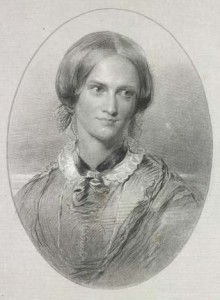
Charlotte Brontë
The “what if?” doesn’t have to be particularly daring or fantastical. “What if a young governess fell in love with her married employer?” could describe the experiment of Jane Eyre. In it, Charlotte Brontë constructed an experiment in experience—an experiment in the human condition, and told from a point of view not commonly disseminated up to that point in British literature. The experiment’s result is a document of 19th century countryside England, a world fairly foreign to us today but recognizable as a landscape of the human psyche. And thanks to Brontë’s experiment, we can visit that world without a time machine or other exotic technology.
When I say a “controlled experiment,” I mean controlled by the kind of restrictions Brontë imposed on herself throughout the creative process. Fiction is a plastic form. Brontë could’ve introduced any number of outlandish plot devices or characters. Instead, Brontë kept the novel’s details and events near to the world she knew and let the characters push through the complications themselves. Jane Eyre‘s ending is not clean and crisp, but it was under Brontë’s control. These decisions are guided by the hand of the author, controlling (but hopefully not dictating) the experiment’s outcome.
For an example of an experiment with a different set of controls, there’s Lewis’ Alice books. “What if my little friend Alice was transported to a world of playful illogic and word games?” Lewis gave himself the freedom to veer wildly from the known world. For one, the Alice in the books isn’t even the real Alice Liddell. And if gravity suddenly reversed itself in the Alice books, we wouldn’t be surprised at all.
On the other hand, gravity reversing itself would utterly destroy the experiment called Jane Eyre. Alice and Jane Eyre were written in the same time period by authors living a few hundred miles apart, but they ran very different experiments in what it means to be human.
Just as in science, not every experiment is a success. Some are duds. And Brontë did produce a dud of sorts: an experiment called The Professor, a novel about a male teacher at a Belgian all-girls school. The manuscript was rejected by every publisher she offered it to. Years later she tweaked the parameters of that experiment—tweaked the parameters of the experience—and wrote Villette, a novel about a female teacher at a Belgian all-girls school. Of Brontë’s works, The Professor is considered for completists and not widely read. Villette is thought by some to be Brontë’s true masterpiece.
This is prehistoric by Internet time, but a few months ago Paul Cantor’s essay “eBooks Are Great But….” left me thinking about a lot of issues surrounding the rise of digital books. I responded to him directly on Medium (you can read my full response), but as time passed one detail I touched on kept nagging me:
My biggest gripe with the Kindle is how it opens a new book to the first page of the first chapter. Here Amazon screwed up. Show me the cover, then let me page through the front matter to the first page. This is the pleasure and ritual of reading a new book.
Now every time I download a new ebook or sample, I think back to this comment. Amazon really did screw this up. When I pick up a physical book, the first thing I read is the cover, then the title page, then the rest of the front matter (“prelims” in the trade), before reaching the first page of the first chapter. This is not wasting my time. This is part and parcel of to the reading experience.
For the sake of example, let me take a physical book off my shelf—John Hersey’s Hiroshima.
The cover for my paperback version is superb, a rising sun drenched in suggestive red. It rises over a moon bridge with the water below as blood-red as the sun. (Without a word printed on the cover I would immediately know this book regards Japan.) The quoted Saturday Review of Literature‘s exhortation that “everyone able to read should read it” is almost unnecessary at this point in time for a book of Hiroshima‘s stature, but I suppose it gives lingering on-the-fence customers one more reason to buy a copy.
Since I was a child I’ve studied book covers before diving in to the book itself. I’ve seen plenty of crappy book covers in my lifetime, but a great cover is worth moments of reflection. I’ve always admired the illustrator who can capture the essence of an entire book in a single image. Wendell Minor (the cover illustrator for this edition) did a fine job of that without exploiting the more obvious emotional signals the name Hiroshima evokes. The cover is tasteful, evocative, mournful, and thoughtful—just like the book itself.
Opening the book, the first printed page (titled “When the Bomb Dropped”) lists the main characters of Hiroshima along with brief biographies for each. This isn’t filler. This page suggests to me that Hiroshima is a book of many people, not just one. What’s more, this is not a book of dry facts about the detonation of the first atomic bomb against a population, nor is it scientific analysis. It’s also not a military history, as none of the names have a government or military title.
The next page lists John Hersey’s other books, published between 1943 to 1987. I was under the impression that Hersey was a journalist who fortuitously had a magazine feature article turned into a bestselling (and now historical) book. I didn’t know he had such a prolific career. While this seems minor, skimming down the list shaped how I received Hiroshima.
Then comes the title page, a clean, almost retro layout befitting the book’s original publication in the 1940s. A small note indicates the final chapter was written more recently, forty years after the bombing of Hiroshima. Again, that’s a nice piece of information to have—that while I’m reading a history book originally published contemporaneously with the events it describes, it’s not been frozen in time.
The colophon or copyright page may be the driest page of all front matter, but again, I glean something from it: “Copyright 1946, 1985 John Hersey.” Not everyone who picks up Hiroshima will recognize Hersey wrote it in the immediate aftermath of the bombing; that’s worth knowing before reaching the first page. Another tidbit to be learned: “The entire contents of this book originally appeared in The New Yorker,” additional historical context.
Then a modest table of contents. Five chapters numbered, each with a brief summarizing phrase that, even before reading the rest of the book, acts as a primer on the history Hersey records: “A noiseless flash.” “The fire.” “Details are being investigated.”
Only upon turning the table of contents does the first page of the first chapter arrive. If I’d downloaded Hiroshima to my Amazon Kindle, this would be the first page presented. I would have been robbed—look again at the experience I’ve accumulated perusing the book’s cover and front matter.
I’m not blasting ebooks or declaring them dead or a horrible experience. I’m suggesting Amazon has made a questionable design decision, and one easily corrected. A simple option in the Settings would be enough to satisfy me.
Update: More on Hiroshima, John Hersey, and book covers here.
See the Introduction for more information on Twenty Writers, Twenty Books. The current list of writers and books is located at the Continuing Series page.
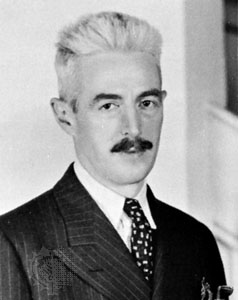
Dashiell Hammett
Earlier this year I wrote about “The Flitcraft Parable”, a story Sam Spade tells in The Maltese Falcon to Brigid O’Shaughnessy, the novel’s femme fatale. The parable is interesting for a number of reasons, but the central question that’s been attacked by readers and critics for almost a century is the purpose of its telling. Why does Sam Spade tell this odd story to O’Shaughnessy?
The story of Charles Flitcraft abandoning a secure life of money and family, only to return to a similar life in a different city, appears unrelated to the novel’s primary concern, the search for a bejeweled antique statuette. Some speculate Spade tells the story to O’Shaughnessy as a warning, that he knows she’s incapable of change and will continue lying to him, just as she’s lied in every encounter he’s had with her so far.
I don’t think the Flitcraft Parable is so simple. Before, I wrote about an academic connection I thought author Dashiell Hammett was making—that Charles Flitcraft’s assumed name, Charles Pierce, is a reference to philosopher Charles Sanders Peirce and Pragmatism, the school of thought Peirce founded. I’m the first to admit, it’s an egghead approach to a novel of murder and corruption, and one that Hammett probably didn’t expect a reader to delve terribly deeply into. That’s why I’m writing this post, a second look at the Flitcraft Parable, one that’s not so dependent on the headiness of nineteenth-century philosophy.
To be clear, I remain convinced Hammett intended to make a connection between Flitcraft and Charles Peirce’s philosophy. What I’m offering here is an interrelated interpretation of the Flitcraft Parable, an analysis that hews closer to the book’s plot and intentions without tossing out my first attempt.
If you’ve not read my first post, I’d recommend at least reading the section titled “The parable” before continuing. I’m not going to re-summarize the Flitcraft Parable here.
Warning: Spoilers ahead. In my prior post I attempted to avoid discussing the conclusion of The Maltese Falcon. It’s impossible for this post to do the same.
“The only formal problem of the story”
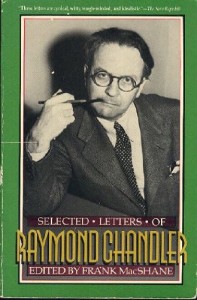
Raymond Chandler
Dr. Samuel Johnson was not Shakespeare’s first critic, but he was arguably Shakespeare’s first preeminent critic. Hard-boiled writer Raymond Chandler holds a similar relationship to Dashiell Hammett. In Chandler’s essay “The Simple Art of Murder” (first published in The Atlantic Monthly in 1944, fourteen years after the release of The Maltese Falcon), Chandler critiques and analyzes Hammett’s body of work, naming him as the one figure who represents the hard-boiled school of writing as its “ace performer.” He praises the forcefulness of Hammett’s prose and, most famously, how “Hammett gave murder back to the kind of people that commit it for reasons, not just to provide a corpse.”
Everything Chandler observes about Hammett’s writing can be applied to the Flitcraft Parable. Spade’s sparse language when telling the parable is as direct as darts puncturing a dartboard. The parable is constructed of fleshy people, people who do things for palpable reasons, even if those reasons are mysterious to us and based on an internalized logic we may never adopt.
Then, like Dr. Johnson’s best slicing analysis of Shakespeare, Chandler makes an off-the-cuff observation of The Maltese Falcon, tossing his insight before the reader’s feet as though embarrassed something so effortless must be mentioned:
…in reading The Maltese Falcon no one concerns himself with who killed Spade’s partner, Archer (which is the only formal problem of the story), because the reader is kept thinking about something else. [Emphasis mine.]
What Chandler alludes to here is the first murder in The Maltese Falcon. In Chapter One, Miles Archer, Spade’s partner, rushes to take leggy Brigid O’Shaughnessy’s assignment for his own; the kids today would call it a “cock block.” That night—Chapter Two—Archer is found murdered. This is the “formal problem” Chandler draws attention to in-between those parentheses.
More dead bodies arrive in The Maltese Falcon, bullet-ridden corpses shot up like a stop sign outside an Alabama roadhouse, but none of the murders are truly mysterious. The moment cold-fish henchman Wilmer and his pocket .45 cannons are introduced, it’s patent the murders are his handiwork. None of the other characters are capable of it. Dandy Joel Cairo and aristocratic Gutman are too drenched in Old World genteel for the blithe butchery Wilmer is thirsty to administer. O’Shaughnessy may have claws, but her true power lies in charming men to do her killing for her. Chandler’s on the money; the only formal problem in The Maltese Falcon is the death of Archer, a murder not so easily pinned on Wilmer.
Step back and admire this for a moment. Archer is the first murder in a mystery novel—and the detective’s partner to boot—yet Archer’s corpse is all-but-forgotten five pages after Spade identifies the body. Archer’s death remains, at best, a tertiary concern for another 175 pages. With the fluidity of a street con, Hammett misdirects our attention with Istanbul intrigue, the promise of a jewel-encrusted statuette, and hoary tales of the Knights Templar. Papering over Archer’s murder is an audacious and under-appreciated maneuver on Hammett’s part, one that demonstrates the confident control he maintains throughout the book.
Spade’s credo
The mystery of Archer’s murder may all but disappear after Chapter Two, but it comes roaring back in the final chapter. Spade confronts Brigid O’Shaughnessy, whom he’d told the Flitcraft Parable to earlier in the book, and states he knows she murdered Archer, pressing her and disarming her lies until she finally confesses.
In my prior post, I concluded that the Flitcraft Parable was a kind of manifesto for Spade, a declaration that he will eke out the truth of the matter, no matter the consequences. I also noted that
…Hammett wrote The Maltese Falcon in the third-person objective. Although Sam Spade is in every scene and the narrator stays close to him, we as readers are never privy to Spade’s internal thoughts. We can only guess what Spade is thinking at any moment. That’s the true mystery of The Maltese Falcon, not whodunnit, but What does Sam Spade know, and when does he know it?
Flatly, I believe Spade knows O’Shaughnessy had murdered Miles Archer when he tells her the Flitcraft Parable in Chapter Seven. I believe Spade suspects her as early as Chapter Two, when he views Archer’s body and takes a walk afterwards “thinking things over,” for all the reasons he names to O’Shaughnessy in the final pages.
If you view the Flitcraft Parable as a kind of manifesto or speech Spade is making for O’Shaughnessy, there’s one more speech Spade makes to her in the final chapter:
When a man’s partner is killed he’s supposed to do something about it. It doesn’t make any difference what you thought of him. He was your partner and you’re supposed to do something about it. … I’m a detective and expecting me to run criminals down and then let them go free is like asking a dog to catch a rabbit and let it go. It can be done, all right, and sometimes it is done, but it’s not the natural thing.
There’s a thin, near-invisible length of thread running between the Flitcraft Parable and the above, Spade’s credo.
The Flitcraft Parable, then, is Spade’s soft-sell to O’Shaughnessy. He’s telling her he’s a reasonable man. When Spade hears Flitcraft’s story of the falling beam, Spade agrees it seems reasonable, in it’s own way, for Flitcraft to abandon his wife and family–but he still returns to Mrs. Flitcraft to inform her what has happened to her husband.
Spade is accused of many things throughout The Maltese Falcon, some cold, some sordid, but with the Flitcraft Parable he’s quietly demonstrating to O’Shaughnessy that he will only bend so far. As he says in his credo, letting criminals go free “can be done, all right, and sometimes it is done.” He admits to her that Miles Archer “was a son of a bitch…you didn’t do me a damned bit of harm by killing him.” And then he hands her over to the police.
Would he have turned her in if she’d confessed earlier in the novel, after telling her the parable? It’s difficult to say, but the quiet way he tells it to her signals to me that he’s offering her a chance for redemption.
Chandler again, this time from his introduction to Trouble is My Business:
[The hard-boiled story] does not believe that murder will out and justice will be done—unless some very determined individual makes it his business to see that justice is done. The stories were about the men who made that happen. They were apt to be hard men, and what they did … was hard, dangerous work. It was work they could always get.
The Maltese Falcon is not a whodunnit, or a book about a statuette, or even a book about a private detective. It’s about a man who bears the weight of administering justice on-the-fly in a corrupt and mechanical world. Sam Spade holds two lives in his hands, Charles Flitcraft’s and Brigid O’Shaughnessy’s. Hard, dangerous work, work he could always get.
For the past few days there’s been an under-the-radar furor over the news that ESPN will shutter (and now has shuttered) Grantland, Bill Simmon’s unorthodox and motley digital magazine he started in 2011. A melange of sports writing and pop culture analysis, Grantland offered daily doses of baseball/football/basketball coverage (“The Triangle”), movie and television reviews, NBA trade predictions, Hollywood power-structure tell-alls, and straight-up unabashed fan writing of all manner of popular entertainment. The moment the Twittersphere kinda-sorta erupted with news of Grantland’s demise I immediately felt sullen. Some grown-up in ESPN’s accounting department had taken my lollipop away.
Excuse me while I make a poor but useful metaphor: Grantland was the digital equivalent of Chinese-American cuisine. Both offer a little of something for everyone, and the elements together on the plate taste like nothing else in the American palate. Starchy staples, tasty fried sports writing, as well as specialty items you can take or leave, the sweet-and-sour film review or the Kung Pao TV retrospective. Founder and editor-in-chief Bill Simmons’ columns? The fortune cookie.
Unsurprisingly, Grantland was heavy on sportswriting. Bill Simmons’ career as a Boston sportswriter and later with ESPN guaranteed any site he started would zero in on the hardcore day-in, day-out sports fan. But Simmons aimed higher than the lad-magazine sports coverage dominating the commercial Web today. He also avoided the purple athlete hagiographies Sports Illustrated‘s writers pen in the hopes of turning a feature article into a book. Instead, Simmons looked for thoughtful, side-angle takes on sports that avoided the breathless “you-are-there” prose and sports-radio head-bashing. Grantland offered college basketball coverage that would make any casual fan a maniac, unapologetic take-downs on the NFL concussion controversy, and a soulful piece on Don King at the end of a remarkable lifetime, a story that should’ve won a Pulitzer.
If sports don’t float your boat, Grantland’s television and film writing was equally strong. These features weren’t “bolt-ons” designed to drive traffic to a sports-centric site, but an integral part of Grantland’s overall gestalt. (Now you see where I’m going with this Chinese food metaphor.) In fact, that might be the secret of Grantland’s success: it treated TV and film criticism with the same irreverent seriousness as great American sportswriting. Simmons recognized a sports-fan-like obsessiveness in the Mad Men binge–viewers and the art-house film fanatics. They take their pursuits solemnly and dive in deep to their pet loves, but not with the deadly sanctimoniousness of political junkies or finicky tastes of music fans. Grantland targeted today’s connoisseurs of popular narrative entertainment, people who watch the movie then watch it again with the director’s commentary.
Most of all, Grantland recognized it was possible be a fan of all these cultural wellsprings—Major League Baseball, Breaking Bad, Christopher Nolan—and smart enough to want to read deeper and broader into them all. Bill Simmons laid it on the line: great writing will attract eyeballs, and it will keep them coming back for more.
My appreciation for Grantland came last July when I swore Grantland was committing a bizarre form of suicide. The noose they chose to hang themselves with was “Rom Com Week,” five days of retrospective on the best and worst of Hollywood’s romantic comedies. How could a site for sports fans who think the NBA draft is nail-biting drama possibly want to read about movies that made you laugh as you cried?
Well, it worked. It even made me rethink the romantic comedy as a—fine, I’ll say it—art form. I devoured each daily transmission of “Rom Com Week” at my office desk over a brown bag lunch, always eager for the next day’s installment. The cherry to top it off was Bill Simmons’ wrap-up analysis, “Sports Movie or Not a Sports Movie?” He attacked what may be the most pressing question in popular culture that was never asked and never answered: Were movies like Bull Durham, Tin Cup, and The Replacements sports movies or romantic comedies? In an awe-inspiring and sweeping investigation, Grantland uncovered a massive underground river in American culture, the overlap between “guy” sports films and “gal” rom-coms, with Kevin Costner as the center peg holding it all together. If Simmons’ essay doesn’t rearrange your head, you’ve been living under a rock for the past three-plus decades.
That’s the fortune cookie, Bill Simmons sliding in at the last moment with surprising observations and a near-encyclopedic knowledge of the subject at hand. Hell, he almost got me to forgive Saturday Night Live for forty years of repetitive and spineless comedy—almost. That said, Grantland’s SNL retrospective adds up to some of the best writing ever on an American institution that somehow manages to delude itself (and a lot of other people) into thinking it’s still an anti-establishment rabble-rouser, even while wearing a tuxedo and hobnobbing with A-list celebrities.
To recap, the first four questions you should ask yourself for the treatment are:
Protagonist: Who is the main character of this story?
Setup: What is the minimum of backstory, history, setting, or exposition that must be presented before the main story begins?
Inciting Incident: What event disrupts the rhythms and rituals of the main character’s daily life?
Plot Point #1: What reverses the main character’s daily life such that there is no easy return to normalcy? (Sometimes this is the Inciting Incident, but often it is not.)
Answering those four questions puts you at the halfway mark for writing your story’s treatment. Now I’ll go over the treatment’s final four questions.
Conflict: What is the primary or core conflict the main character faces? Your answer to the prior two questions (Inciting Incident and Plot Point #1) should suggest an answer to this question. You might find yourself going back to re-answer this question later, when the story is firmer in your mind and the characters’ conflict better defined. For example, although Raisin in the Sun‘s core conflict would appear to be racism, a close reading of the play suggests the conflict is the family’s response to racism—will they keep their heads’ down or will they walk proud?
Assessment: What does the main character do to immediately resolve Plot point #1? So far, the main character has experienced some kind of disruption (the Inciting Incident) and then an event that ensures they cannot walk away from that disruption (Plot Point #1). Whatever your character’s desires or motivations, they will still want to resolve their situation as quickly as possible. What action would they take?
I’ve learned that, in many ways, this is a crucial hinge to the success of a story. The Inciting Incident is often—almost always—out of the main character’s control. The no-going-back event (Plot Point #1) may be of their device, but it often is not. The Assessment is the main character locking into a course of action. This decision often determines the trajectory, shape, and flavor of the rest of the story.
Midpoint: What revelation or reversal of fortune occurs that permanently shifts the story trajectory? As the name implies, this is an event which occurs approximately halfway through your story. Depending on the type of story you’re writing, this is often where the main character’s true antagonist is revealed or discovered, but that’s not a requirement. The purpose of this question is, in many ways, to keep the plates spinning—to prevent the character from getting too comfortable in this new situation, and to prevent you, the author, from digressing too far from the core conflict (which is terribly easy to do with longer forms, such as the novel).
Syd Field (the creator of the paradigm I’m riffing off of) explained in The Screenwriter’s Workbook that he “discovered” the Midpoint while analyzing Robert Towne’s screenplay for Chinatown. Field recognized that in Chinatown (and many other movies), something significant was happening around the middle of the film, but he couldn’t quite put his finger on what the event was, or why it was significant. In Chinatown, after much analysis, he realized the Midpoint was when the protagonist (private detective J. J. Gittes) discovers that the head of Los Angeles’ water company is married to the daughter of the founder of the water company.
At this Midpoint moment, almost all the questions and complications in the film have been introduced: an unsolved murder, the taint of corruption in Southern California’s water politics, and the detective himself being setup to unwittingly smear an innocent man in the press. At the Midpoint, we think we’re watching a murder mystery against the backdrop of 1930s city politics. J. J. Gittes discovery of the true relationship of the three central characters transforms Chinatown into a drama of a highly dysfunctional family. That’s what Syd Field (and this process) is asking for you to consider for your own story’s Midpoint. It’s the moment when you’ve laid all your cards out for the reader, the moment when the reader now recognizes what’s really at stake for your main character.
The Midpoint is more than a new complication. It’s a chance for you, the writer, to reveal that the story so far is not the whole story. Jim Thompson said there was only one kind of story: “Things are not what they seem.” The Midpoint is where you introduce revelations and reversals that open up the story in larger ways.
Plot Point #2: What dramatic or defining reversal occurs that leads toward a confrontation with the core conflict?
This part of the treatment is the furthest removed from the beginning of your story, and therefore one of the hardest to commit to paper.
Often when I’m writing I have a crystal-clear view of the story’s opening and a hazy idea how I want it to conclude. Finding the path between those two moments is what the process of writing is about. Plot Point #2 is where you make a statement about the final actions and decisions before the end of the story.
To make this easier, go back to what you wrote for Conflict (above) and re-read it closely. Then ask yourself how you think the story will end. You don’t have to commit to this, just get it down to see the words staring up at you from the page. But remember: this isn’t Plot Point #2. It’s where Plot Point #2 is leading toward.
Between those two points—the Conflict and your idea for an ending, however sharp or hazy—lies Plot Point #2. Like the reversal in the Midpoint, a story rarely arouses the reader when it’s predictable. Look for another reversal here: an unexpected shift that leads your protagonist from the middle of your story (Act Two) into the third act, where the final confrontation lies.
An illustration might help here. (Warning: spoiler alert.) Kurt Vonnegut’s Cat’s Cradle has many unexpected twists and turns—it’s easily Vonnegut’s most unpredictable novel—but the reversal that sets up the novel’s conclusion is when the protagonist is declared the San Lorenzo’s next Presidente by the dying dictator. This is not the conclusion of the novel, it’s the final complication in the character’s dramatic journey. (It’s important to realize that some complications are welcome by the protagonist, even though they might come back to bite him or her later.) With the protagonist’s ascension to El Presidente, all the bowling pins are in place, ready to be knocked down with godlike force in the novel’s stunning final chapters. This final complication is Plot Point #2.
Don’t worry if you currently lack Vonnegut’s clarity in your own character’s journey. Like the rest of this treatment, the goal here is to get ideas on paper and begin organizing the whirlwind of inspiration now circling your as-yet-unwritten story.
Take a breather
It looks like a lot, but you can craft a treatment in less than an hour. Give yourself time and space to do it. Don’t rush yourself, and don’t do it while distracted—no Internet, no television, no kids. Most importantly, write your treatment down. Like writing a contract, putting pen to paper forces hard decisions, engagement, and thoughtfulness.
When you’re finished, set your pen down and take a deep breath. When I write a treatment I often feel much like I feel after a sustained time writing prose: a bit exhausted, a bit lost, and more than a little exhilarated.
Remember, writing a treatment is writing. Don’t mistake this as an academic exercise. Organizing your thoughts on paper is as important as writing, editing, and polishing the final prose—it’s just a preliminary to those important steps. Writing a treatment is writing.

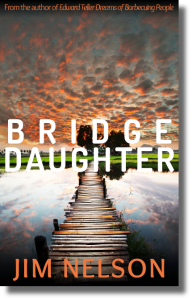 I’m happy to announce that my new novel Bridge Daughter is ready for the world!
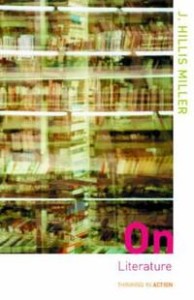 Not too long ago I finished reading J. Hillis Miller’s On Literature, a slim and thoughtful consideration of the role of the written word at the end of the 20th century. Born from a lecture at UC Irvine in 2001, Miller expanded his talk into six chapters and 160 pages of conversational prose asking the simple but still-unanswered questions of literary theory: What is literature? Why read it? And how does it “work”?

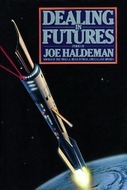 The problem with describing fiction as a hyper-reality or virtual world is that these terms suggest science fiction. When I was young, one of my favorites books was Joe Haldeman’s science-fiction story collection Dealing in Futures. Its title instantly suggests that the book will generate for you any number of alternate worlds of a future time—that it’s “a pocket or portable dreamweaver.” Miller doesn’t limit this idea to science fiction, however. He sees all fiction as generators of virtual worlds.
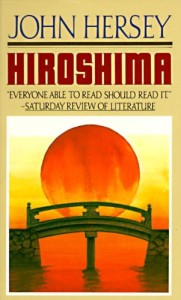 For the sake of example, let me take a physical book off my shelf—John Hersey’s Hiroshima.
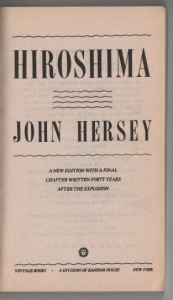 Then comes the title page, a clean, almost retro layout befitting the book’s original publication in the 1940s. A small note indicates the final chapter was written more recently, forty years after the bombing of Hiroshima. Again, that’s a nice piece of information to have—that while I’m reading a history book originally published contemporaneously with the events it describes, it’s not been frozen in time.