Touring the Golden Gate Park Commission Vault

Back in April of this year, I learned of the “Commission Vault Mini Museum” via SFGate.com, the online arm of the San Francisco Chronicle. I immediately booked a reservation to tour the museum, which is so backlogged, it takes month to get in. I only visited on July 9th, three months later.

The Commission in question the San Francisco Park Commission, which governs the city’s Recreation and Parks Department. The museum houses photographs and artifacts from the department’s century and a half tenure, which extends back to 1871.

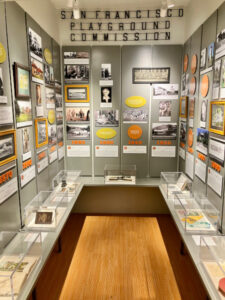
This must be one of the smallest museums on the West Coast—it’s housed inside a walk-in vault. The floor dimensions are perhaps twelve feet by four feet. It’s so compact only four or five people can comfortably stand in it at once. You begin to understand why open reservations are months out.

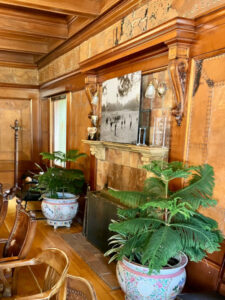
For me, the tour began when I entered the Commission’s headquarters, located at the eastern entrance to Golden Gate Park, inside McLaren Lodge. It was built in the late 19th century for John McLaren, the most famous and prominent superintendent of San Francisco’s Parks Department. The lodge not only served as offices for his staff, but was also home for him, his family, and personal staff. It was as though all 1,017 acres of Golden Gate Park was his personal backyard.
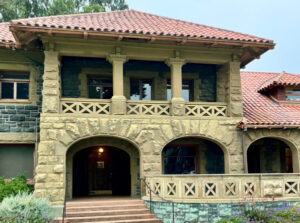
It’s a grand structure, with rustic stone exterior and rough columns and arches, topped with red clay roof tiles. Historian-in-residence Christopher Pollock told me it’s often described as a mixture of Mission Revival and Craftsman architecture, although at least one source dubbed it “Scottish Baronial.” It’s a fitting term for horticulturalist McLaren, who immigrated to America from Scotland in his youth, and was known in his later years as bearing a kind but kingly manner.

Either way, McLaren Lodge’s architecture is oddly familiar but strikingly unusual compared to San Francisco’s other architectural styles. Its’ the kind of building a Hollywood millionaire might build in the mountains near Lake Tahoe, or you might read about in The Day of the Locust. In that sense, the lodge is uniquely Californian: A style evocative of another place or time, but not of any other time or place.

As a boomtown, early San Francisco had few public green spaces. The thousand-acre Golden Gate Park on the city’s west side was the solution. The first problem to be solved was the land itself. The acreage was barren and covered in windswept sand dunes blown eastward from the Pacific ocean. (No, really—check out some photos to see for yourself.)

McLaren and his predecessor William Hammond Hall spent decades terraforming this desolate stretch of wasteland into a woodland reserve, with rose gardens, rhododendron dells, groves of sequoias and Monterey cypress, and wide meadows of Kentucky bluegrass. For entertainment, McLaren installed lakes, fishing holes, lawn bowling courts, horse stables, and much more. Golden Gate Park was California’s first Disneyland, a theme park before there were theme parks, showcasing the state’s natural beauty.

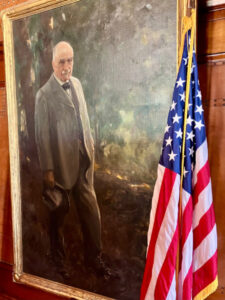
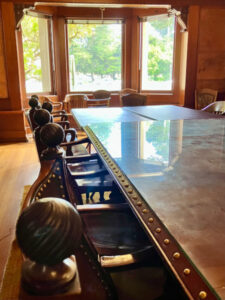
McLaren’s decades of devotion to building the greatest city park in the world, and the resulting grandeur, made him one of the most popular public servants in San Francisco history. The city amended its charter in order to appoint him Park Superintendent for life, a post he held for over four decades. The meeting room where the Vault Museum is found features a prominent portrait of McLaren, still overseeing the Commission’s agenda decades after his passing.
The vault & museum

The vault holding the museum was where the Commission originally stored cash and valuables, from a time when physical currency was more common for things like park permits and payroll. Later, the vault was cleared out and used for storage, which included several filing cabinets of paperwork. Those papers turned out to be historical documents unto themselves. They’re now stored at the San Francisco Public Library.
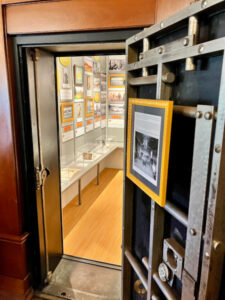
With the vault cleared out, the idea came to use it for a display of the Park’s history, which led to the creation of the Mini Museum.

The Museum itself is a picturesque but brief travel through the decades of Golden Gate Park’s long life. Photographs of the early years show the sand dunes that had to be tamed by McLaren and Hall, as well as the cemeteries originally lining the northwestern border of the park. (Those graves would eventually be moved down the peninsula to Colma; some of the broken headstones would wind up lining the pathways and gutters in Buena Vista Park, a few blocks from McLaren Lodge.)

Each decade thereafter depicts the city’s and park’s development, recording the growing population and an increasing number of public parks throughout San Francisco. (One surprise for me: the nondescript Colombia Square, which I gave short shrift to in my “San Francisco streets with confusingly similar names” page, is actually one of the city’s earliest neighborhood parks.) The timeline also shows Golden Gate Park as a civic meeting place and cultural lodestone, such as when it hosted now-legendary rock acts in the late 1960s.
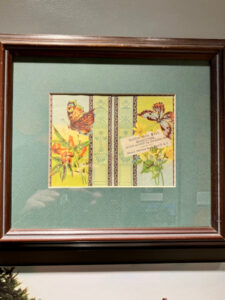
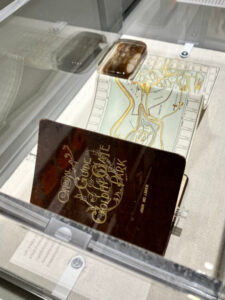
For over a hundred years, San Francisco has been known as a “city of hotels.” It’s also a city of museums and tours, mainstream as well as quirky, cool, odd, and now tiny. It’s hard to call the Commission Vault Mini Museum a must-see for visitors in town for only a few days. I do think it’s worth your while if you love San Francisco history—especially the history of its parks—and can line up a spot for an afternoon viewing. I wasn’t disappointed at all; I’m just unsure if my enthusiasm for Golden Gate Park’s history is widely shared.

Someone on the tour asked if they offered tours of McLaren Lodge itself, which apparently is under consideration. Combining a tour of the vault with a tour of house itself would make an afternoon visit a no-doubter.

San Francisco street names project

Title card for "The Streets of San Francisco" TV show

I’ve added a new page to this site, a little side-project I’ve been working on for a while now called “A somewhat subjective list of San Francisco streets with confusingly similar names.”

It’s pretty much what’s printed on the tin, but with a few surprises. Why are there two Mason Streets in the city? If Division Street divides two neighborhoods, what does Divisadero Street divide (if anything)? And is it true that two of the numbered east-west streets actually intersect?

It’s a goofy but fun way to look at San Francisco’s layout and history. I hope you get as much out of reading it as I did putting it together.

Growing up a Scholastic Books kid

Clifford the Big Red Dog

I was raised in a house brimming with books. Children’s books especially, but plenty of books for teens as well. I inhaled these books, reading some three or four times, just so I could reenter their worlds and experience them one more time. My brother and I were never in want of books, although my parents were not especially well-to-do back then.

The reason for this surplus is that my mother worked for Scholastic Books—yes, the Scholastic Books that hosted book fairs at your school when you were young, the company that published evergreen classics like Clifford the Big Red Dog, Goosebumps, and Encyclopedia Brown, Boy Detective. She did not work at the company’s New York editorial offices—what a different childhood that would have been—but rather at a West Coast distribution warehouse located in sleepy Pleasanton, California.

My mother was a voracious reader, and she wanted to pass her love of books on to her children. She was in her early twenties when she landed her position at Scholastic, and it was a bit of a dream job for her.

Her determination to teach us to read paid dividends. I could read by age three, although I was not an active reader. I preferred running around our quiet suburban neighborhood, playing kickball and riding my Big Wheel from one neighbor’s home to the next. I was one of those fearless/clueless kids that would walk up to a front door, ring the bell, and ask the parent if their child could come out and play. (I often did this during dinner time, much to the annoyance of our neighbors.)

It was in this suburban idyll that my mother introduced me to books. Scholastic permitted employees to take home a small number of remaindered and returned titles from the warehouse. When my mother came home from work, she occasionally would be carrying a children’s book or two. I was completely uninterested at first, and so these books were stocked away in a hallway closet.

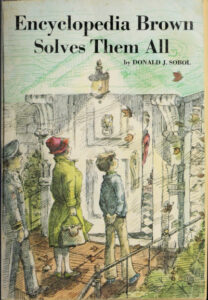
Finally, when I was five or six, my mother suggested I might enjoy Encyclopedia Brown Solves Them All by Donald J. Sobel. For whatever reason, I picked it up, lay on the couch, and consumed the book from start to finish in one read-through.

For those who don’t know, Encyclopedia Brown is a child sleuth who runs a detective agency out of the garage in his home. Propitiously enough, his father is also Chief of Police for the Smalltown, USA suburbia Encyclopedia’s family lives in. Each book in the series features ten (so so) short kid-centric mysteries, like stolen ice skates and missing hamsters. Right before Encyclopedia Brown solves the “crime,” the reader is asked to guess the solution before turning to the answer in the back of the book. (In this way, Encyclopedia Brown mirrors the Golden Age of Detective Fiction, where books also halted the narrative to challenge the reader to solve the mystery.)

Cover of "Encyclopedia Brown Solves Them All" by Donald J. Sobel

Hooked, I read as many books in the series as she could bring home. From there, my reading habit grew outward. My mother happily brought home more challenging work for me to read.

The cultural, racial, and sexual shifts in America made the 1970s a rather shaggy and complicated time to be a child. This employee’s perk of bringing home remaindered books meant a great many of the titles I read were published in the 1950s and early 60s. The illustrations depicted working dads in ties and wingtips, and homemaker mothers in dresses and pearls carrying spatulas. Boys had haircuts like Marine recruits, or wore coonskin caps. Girls practiced ballet, rode horses, and, if they were a tomboy, tagged along with the boys on whatever wild adventure they cooked up. Some of these books had been published a mere ten years earlier, yet they read like they’d come to me via a bookmobile time machine.

Damn or praise these books on their political merits, the point is, I became an active reader at a young age. My reading diet quickly grew omnivorous.

I began to read the newspaper every morning. Not merely the comics page, but much of the front section, and especially the Opinion and Op-Ed pages. When I was bored, I would pick a volume of an encyclopedia off our family room shelf and simply browse it, page by page, until I found some topic I wanted to read more about. Later, I did the same with the colossal People’s Almanac #2, which I honestly believe I read in its entirety. (Not from front to back, but by dipping into articles as they suited me over the years.) All of this came about thanks to my exposure to Scholastic’s books.

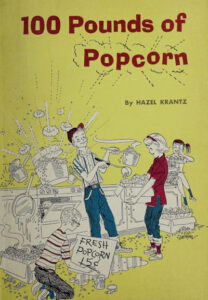
This Flickr collection of titles sold by Scholastic Books in the 1960s and 70s really takes me back. I’ve not read all these titles, but I recognize the covers of almost the entire collection. Books about fancy dolls and show horses were not really my “thing” as a young boy, but I treasured books by Beverley Cleary and Judy Blume, as well as the intense psychological portrait of Harriet the Spy. Encyclopedia Brown made me want to be a detective; Alvin Fernald made me want to be an inventor; 100 Pounds of Popcorn made me want to be an entrepreneur. Every young person who read the Mad Scientists’ Club’s books wanted to join.

There are other books that stayed with me, but whose titles I’ve forgotten. One was about a boy blinded by a firecracker who has to learn Braille and to navigate the world via a seeing-eye dog. Another regarded a pudgy boy who lives in a New York skyscraper with his fitness-obsessed parents. They want to send him to a “fat camp” boarding school which, he learns in confidence from an admission counselor, doesn’t actually care what the kids eat, or even if they exercise. The boy spends his summer break devouring ice cream sundaes and perfecting his admissions essay. It’s a subversive little book, and definitely the product of 1970s, and not 1950s, America. My young mind, raised on the coy cynicism of Looney Tunes and MAD magazine, was magnetically attracted to anything eager to thumb its nose at authority.

Cover of "100 Pounds of Popcorn" by Hazel Krantz

Over time, my mother got to know many of the Scholastic editorial staff in New York City, even if their friendship was purely via long-distance telephone conversations. She knew R. L. Stine, for example, creator of Goosebumps. (He was more familiar to me as Jovial Bob Stine, editor of Scholastic’s Bananas magazine, their family-friendly substitute for MAD.) Somewhere in my parents’ house is a copy of Clifford the Big Red Dog signed by Norman Bridwell.

My mother loved working for Scholastic, because she cherished children and wanted every child to have books. She did that by providing free books to our school’s Scholastic Books Fairs, to ensure no one went home empty-handed. And she made sure our teachers’ classrooms had things like children’s dictionaries on their shelves, if they needed them, or any other reference material they may be lacking.

She grew up on a ramshackle farm in the Mississippi Delta, raised by her grandparents, where the muddy soil was tilled by mules and mosquitoes clouded the humid air. For her, books were a cheap way to escape penury and live vicariously in another world, if even only for a few hours at a time. Books were “portable dreamweavers,” and she wanted to share that dream.

The twelve types of indie writers on X/Twitter

One: The carpet bomber

Non-stop tweets and retweets promoting their books, as well as books by their friends. “What you call ‘social media,’ we call ‘free ad space.'” Apparently, there’s no such thing as too many hash tags in a tweet.

Two: The hustler

They pepper your timeline with tweets documenting their perpetual-motion writer’s life: Workshops, retreats, conferences, book signings, phone calls with editors, selfies with other indie authors. They’re living la vida loca, baby.

Three: The charmed life

Anecdotes about their cats. Magazine-style photos of perfect chai lattes. Dream-vacation photos of rolling green European countrysides. Oh, yes—did they mention they’re spending four weeks in Key West to develop their next novel?

Four: The political animal

Screw books, they’re on Twitter to snark about every D.C. dust-up du jour. Following even one of these accounts will poison your timeline with screaming matches between people who refer to politicians by their initials.

Five: The mover and shaker

Lots of screenshots of Kindle sales reports and KU normalized page counts. Tweet-threads on how to exploit Amazon book keywords and categories. The occasional nostalgia post on finagling that sweet BookBub Daily Deal years ago.

Six: The tea sipper

Drops a tweet every two to six weeks about something absurdly human that happened to them on the way to the pub. For some reason, this type is always British.

Seven: The old oak

Daily pronouncements about how the indie writing scene has changed since they got in on the ground floor waaay back in 2019. Had one bestseller back when you could game the system and get on USA Today‘s bestseller list for a week.

Eight: The unrepentant one

Laughingly brags about using AI to write eight-dozen books a month, all moneymakers. “You suckers are doing this the hard way.” Oddly, they have nothing of substance to say about any other book on the planet, even obvious ones like The Firm, Fight Club, or Green Eggs & Ham. Not an actual author.

Nine: The griper

Never happy with any rating below five stars, and never happy with any review that mentions a problem with their story. What does it take to satisfy these damn readers, a back massage? Stand back, this type is a ticking time bomb.

Ten: The agented

In case you didn’t hear the news, they added it to their account name: “Joe Blow is Agented.” Casually drops tidbits from their latest phone call with their agent, who is agenting them. Offers followers soothing tweets that, one day, if they work hard, they’ll all manage to rise from the trenches and find an agent.

Eleven: A star is stillborn

Mission accomplished! Agent acceptance, book contract signed, manuscript sent off to the editor—this type is last seen boarding the rocket ship to fame and success. Nine months later, they’ve mysteriously deleted all those tweets and switched their account to selling scented bath oils online.

Twelve: Yet another bot

Likes six posts you wrote months ago, follows you, and DM’s you, all in a span of seconds. Has an @-handle with more numerals than your Social Security number. Account name is a Big and Famous writer, who (in real life) has better things to do than maintain a presence on X/Twitter.

A year ago: “A Charlie Brown Christmas”

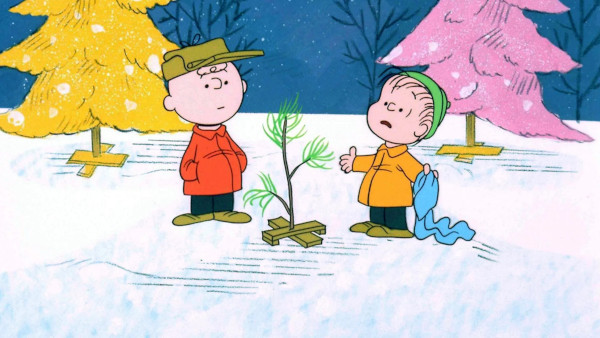
Charlie Brown & Linus talking about a Christmas tree

Last December, I posted some thoughts on “A Charlie Brown Christmas” that kind of took off. Here’s how it opens:

Last night, I saw a live performance of “A Charlie Brown Christmas” at the San Francisco Symphony. One of the people I went with had never seen the original television cartoon—yes, it’s true.

Afterwards, she asked a simple question: “Why did Charlie Brown pick such a bad tree for Christmas?”

Here it is again, one year later:

The other meaning of “A Charlie Brown Christmas”

The other meaning of “A Charlie Brown Christmas”

Charlie Brown and Linus at the Christmas tree lot.  From "A Charlie Brown Christmas."

Last night, I saw a live performance of “A Charlie Brown Christmas” at the San Francisco Symphony. One of the people I went with had never seen the original television cartoon—yes, it’s true.

Afterwards, she asked a simple question: “Why did Charlie Brown pick such a bad tree for Christmas?”

As we walked, we talked a bit about Linus’ speech at the end, and how the story asks about the “true” meaning of Christmas. This was all fine, but it merely danced around her question of the tree.

What I said next sprung from me. It wasn’t something I formulated or ever considered before:

“Charlie Brown recognizes something familiar in the tree. It’s been overlooked and doesn’t seem to have much to offer anyone, which is what he’s experienced in life. At the end, the other kids see the beauty in the tree, and in decorating it they’re appreciating Charlie Brown too.”

I don’t claim this is a deep insight, or even an original one, but it came to me all at once. I watched the TV show as a child in the 1970s, and rewatched it countless times over the years, and yet I’m still finding meaning in this Christmas tale.

Merry Christmas, everyone.