If you’re a writer and not checked out my Substack newsletter, Always Be Publishing, you might give it a go. Since I last wrote about it here, I’ve released a few more posts on writing and publishing in the digital age.
You can find a list of the posts I’ve made so far at the archive. If you’re interested in a free subscription to receive new posts straight to your inbox, here’s where you can start.
Perhaps the solution is to just skip ahead and set everything in 2025, safely away from the horror that is this year …
In 20 years or so, this point will probably be moot. By then, we’ll be ready to curl up with an escapist historical novel set in 2020; we’ll have gotten enough social distance from masks and lockdowns and toilet paper shortages.
My perspective on all this is colored by the fact that I wrote a novel set during 2020, and it centers around the pandemic and quarantines that have affected us all.
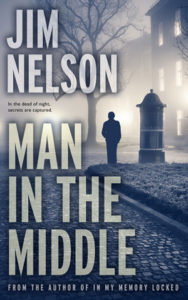
To clarify the chronology, I started writing the book in June (or so) and published it last month. Man in the Middle is set in the first week of California’s shelter-in-place, and although March was not so long ago, paging through my diary entries of those early weeks while preparing the novel reminded me just how otherworldly the world became overnight.
That’s a key point about the book’s development: I started keeping a diary when the pandemic surged in America. For the first few months, I wrote daily, almost religiously, dumping my despair and puzzlement onto the page. When the world opened up and grew less tense, I thumbed back through my notebook and discovered a voice I did not quite know. It was me, but it was not a me I easily recognized.
Certainly I harbored many reservations before I set out to write the first draft. Was the world to be swamped with a flood of coronavirus thrillers? What if a cure is discovered tomorrow? One writer friend warned me off the project entirely. From other people, there’s been a split-brain response: On one hand, writing a book now about the pandemic is “obviously” a commercial money-grab on my part, right? On the other hand, the market for such a book has a tight, closing window, once the vaccines arrive, eh? It’s one of those social situations where they think I’m not seeing the obvious, when in fact I’d gone down those thought-paths several dozen times.
I don’t write fiction to make money. Fiction is freeing for me. No one tells me what to write or how to write it. I set my deadlines. I make my own challenges. I also happen to believe there are readers in this world who, once they’re exposed to my writing, will enjoy it as well. That, more than anything, motivates me to keep writing.
Laskowski relates a comment from her agent:
“If something is set this year and is about the quarantine experience, sort of like a locked-room crime, maybe,” she says. “But a medical thriller about covid? Nope.”
A medical thriller is exactly the kind of novel I told myself I would not write: The beautiful epidemiologist racing the clock to develop a cure; a cold-hearted technocracy blocking her progress at every turn; and her unconscious child in a hospital isolation unit hooked up to a respirator. But the reason not to write a medical thriller about coronavirus is not because we’re living through it—it’s because that thriller has been written many times over, only with different strains of disease of different origin, with different symptoms and different cures.
While I didn’t write a locked-room crime book, I knew early on I wanted it to be a novel of isolation and suspense. The year that is 2020 has been a year of unthinkables. It is also a year hosting a major, tumultuous presidential election set against a backdrop of accusations of foreign and domestic intrigue. Swirled together, these ingredients sent me back to the great political and conspiracy films of my youth (Three Days of the Condor, Invasion of the Body Snatchers, 12 Monkeys). In January, when COVID-19 was a curiosity mentioned occasionally in the news, I was reading Orwell’s war diaries, which also left a strong impression upon me. In March, when the shelter-in-place orders came down, I reread Camus’ The Plague with fresh eyes and a fresh appreciation.
Out of all this arable soil grew a claustrophobic, paranoid book about an isolated security guard who can’t tell if he’s detaching ever-so-gradually from reality. Podcasts, experts, and so-called experts fill his ears with contradictory takes on the world’s sudden course correction. That voice from my diary was now his.
Why wouldn’t I write that book? Whether or not Man in the Middle succeeds on its merits, I’ll let the readers decide. But how could I just set this inspiration aside and write about any year except 2020?
To return to the original question, no, I don’t believe people should have to read about the pandemic right now. I understand why anyone who reaches for a book today would want to read about any subject other than pandemics. Subconsciously, though, the question naturally bleeds into the territory of, Should writers be writing about the pandemic now?
As an answer, consider re-framing the original question as “We’re living through the Great Depression. Must we read about it, too?”
Imagine if the writers of The Grapes of Wrath, The Day of the Locust, The Road to Wigan Pier, They Shoot Horses, Don’t They?, John Dos Passos with his U.S.A. trilogy—and more—decided not to write about the worldwide economic collapse because people were living through it, so why would they want to read about it? For many of those authors ninety years ago, they viewed writing about the Great Depression as a responsibility.
Man in the Middle isn’t an act of personal responsibility, but I did write it for good reasons, even if they’re only my reasons.
(Probably unnecessary disclosure: Tara Laskowski is an editor for Smokelong Quarterly, which published one of my stories years ago. I don’t know if she was an editor there at that time.)
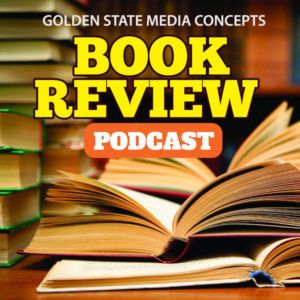
Recently I spoke again with Sarah Meckler of the GSMC Book Review podcast. It has been a couple of years since we last spoke, which was shortly after the release of Hagar’s Mother.
It was a pleasure to catch up with Sarah. Since then, I’ve published In My Memory Locked, which we discussed at some length, and Stranger Son, which we also touched on.
If you’d like to hear the full interview, you can download the episode at Apple Podcasts or listen to it on YouTube. I heartily recommend subscribing to Sarah’s ongoing podcast series, where she interviews a wide variety of writers and genres.
I recently started a new site at Substack, a blog platform with email subscription service. I call it Always Be Publishing.
What’s it about? Why did I start another blog? Some answers are in my introductory post:
Always Be Publishing is about the business and practical side of being a self-publishing writer. …
Six years ago, I wouldn’t have dreamed about offering advice to anyone about self-publishing, other than “You might look into it.” Today, I feel more confident about what I know and what I don’t know. I’ve also learned from the various mistakes I’ve made.
That’s why I started Always Be Publishing. It’s for people interested in the independent publishing revolution, but don’t know where to start, writers already self-publishing and seeking perspectives on how to grow their readership, and people who are looking for encouragement to keep writing and not give up…
Bikes to Books is a literary bike tour of San Francisco—grab a bike, follow the map, and learn a little about San Francisco’s rich literary history. The tour starts at Jack London Alley and ends at Jack Kerouac Alley, on the way passing all twelve streets named after San Francisco writers. It’s designed to be taken individually or, twice a year in a group led by @enkohl and @burrito_justice.
This spring, for reasons you’ve probably heard about, the bike ride will be done virtually on Twitter rather than in a large group. I’ll be joining the tour this Saturday, live tweeting about the author I read at Bike to Book’s inauguration, Frank Norris (McTeague).
No bike required, no bike helmet required, and no mask required. Join in on Twitter and follow the #BikesToBooks hash tag as @enkohl, @burrito_justice, and more local writers and artists join in reminiscing and reporting on some of the authors that made San Francisco the city it is today.
The virtual ride starts Saturday, May 2nd, from 1pm to 3pm. For more information, check out the announcement at Burrito Justice.
In John Updike’s Picked-up Pieces, he expounds on his personal rules for reviewing books. I’m quoting them here to remind myself of this hard-won wisdom as well as to share with others:
John Updike
Try to understand what the author wished to do, and do not blame him for not achieving what he did not attempt.
Give enough direct quotation—at least one extended passage—of the book’s prose so the review’s reader can form his own impression, can get his own taste.
Confirm your description of the book with quotation from the book, if only phrase-long, rather than proceeding by fuzzy précis.
Go easy on plot summary, and do not give away the ending.…
If the book is judged deficient, cite a successful example along the same lines, from the author’s oeuvre or elsewhere. Try to understand the failure. Sure it’s his and not yours?
To these concrete five might be added a vaguer sixth, having to do with maintaining a chemical purity in the reaction between product and appraiser. Do not accept for review a book you are predisposed to dislike, or committed by friendship to like. Do not imagine yourself a caretaker of any tradition, an enforcer of any party standards, a warrior in any ideological battle, a corrections officer of any kind. … Review the book, not the reputation.
I write reviews on this blog. Have I followed Updike’s commandments? Most are familiar to me in a hazy internalized way, even if I’ve not formalized book reviewing rules of my own. I confess guilt to giving away the ending of at least one book (a mystery novel, no less). And I could probably do better in my reviews with quoting the source material.
We live in a time of constant media negotiation. We’re not consumeristic readers any longer. With the Internet we’ve all become critics. Film review sites allows moviegoers to pan movies, even pan them before they’re released. We’re saturated with media and we’re saturated with criticism too. Updike’s rules may serve a newfound purpose: A way for us to judge criticism rather than accept it uncritically.
Last time I wrote of my praise for Monsters and Manuals, a long-running blog on role-playing games. How I came across Monsters and Manuals is a story itself.
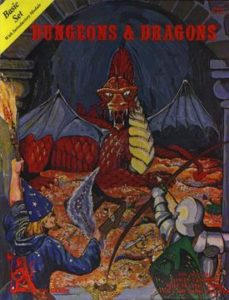
In 2012 I somehow found myself reading a now-defunct Dungeons & Dragons blog called Grognardia. Now, I haven’t played D&D since Ronald Reagan was president, although I was active in the game throughout the 1980s. Why I came across the blog is long-forgotten to me, but there I was reading about D&D in theory and operation.
Grognardia was a bit of a revelation: People—adults—were still playing D&D, even after the rise of the Internet and smart phones and hellaciously ambitious video games. For years I’d thought back on D&D as an odd teenage avocation of mine, a 1980s trend that faded with Rubik’s Cube and glam metal. For me in 2012, the image of four to eight people around a table with paper and pencil rolling saving throws was a sepia-tone daguerreotype of a more innocent age. Now I know better. D&D (and role-playing in general) has changed and evolved, but it’s still going strong.
Reading Grognardia for the first time made me feel like Mel Brooks’ 2,000 year-old man stepping out from a 33 A.D. time capsule and discovering people are still abuzz over that Jesus guy. I lost contact with D&D after 1987 (or so) and Grognardia was my re-introduction to the community. Amazingly, I found the community was talking about the state of D&D prior to 1987.
Reading Grognardia’s love-letters to Gary Gygax, co-creator of D&D, and its many tributes to old-timey role-playing was a massive syringe injection of nostalgia. Reading closely, I deduced blogger James Maliszewski was about my age and had been introduced to D&D around the same time I was (the late 1970s).
Grognardia gave Maliszewski a platform to lay out his dim, gimlet-eyed views of the state of D&D in the 2000s. In fact, Maliszewski held a pretty dim view of all things D&D after about 1983. (“Dragonlance Ruined Everything”, “I Hate Change”) His scheme of D&D’s eras has the game exiting its Golden Age before 1983 and waving goodbye to its Silver Age around 1989. From there, in Grognardia’s estimation, Dungeons & Dragons was downhill.
Maliszewski’s writing is forceful, lucid, and mostly consistent. The early Grognardia posts were manifesto-like, each chiseled from a bedrock belief in old-school D&D, each post a brick set in mortar like a fervent parishioner building a country church by hand. His brimstone sermons on original intent and calls for a return to the soil earned him a wide fan base at his blog’s height a decade ago.
Alas—and you probably saw this coming—cracks in his reputation began to appear not long after I began reading his blog. (Like most Internet dramas, it’s a mildly complicated story and better explained by him and others.) Grognarida ceased updates soon thereafter, and I so searched for a replacement blog to fill the nostalgic void. That’s how I discovered Monsters and Manuals, which I’ve been reading ever since.
While writing my last post, I spent some time revisiting Grognardia. I’d not read it since my first encounter in 2012. The reread gave me a new appreciation for Maliszewski’s idiosyncratic but thoughtful perspectives. Back in 2012, his posts forced me to evaluate (and reevaluate) my memories of D&D and its impact and history. In my reread, I found myself returning to those evaluations once more.
I’m by no means a D&D insider, so my thoughts on the game may earn a collective yawn from the community, but I’ll record them in future posts in case they’re of interest to anyone.