Maintaining a regular writing schedule

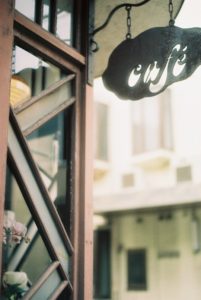
cafe(友光軒) by voo34oov (CC BY 2.0)

There’s a software industry maxim: “Always be shipping.” That means, if you’re not writing software, you’re not shipping software.

The same thinking applies for writing novels, short stories, self-help guides, biographies, and so on. If you’re not writing (or editing, or proofing), you’re not moving closer to getting your work published.

The following advice will sound familiar to anyone who’s read a book or taken a class on how to write a novel:

“Write an hour everyday.”

The idea behind this bit of sage counsel is that, by writing a little bit everyday, you will eventually reach your goal of writing a novel (or a short story, or a movie script). Another way I’ve seen this phrased is, “If a novel manuscript is 350 pages long, that means if you write a page everyday, you’ll have your novel finished in under a year.”

I’m not a fan of these hard-and-fast rules of writing. For one, they’re often difficult to stick to. Like a strict diet or physical exercise regimen, missing a day or two usually leaves behind a sizable amount of guilt. Guilt may get you back to the keyboard and typing, but it’s a horrible emotion to overcome when you should be focused on your characters and their challenges.

Let me offer a slight twist. Instead of “write an hour everyday” or “write a page a day,” find a regular writing schedule and stick to it. In other words, come up with a schedule right for you.

Once a week

I don’t write everyday. I tried it on a number of occasions. It was not productive.

After a lot of experimentation, I found my best work came when I wrote once a week. I’ve written a number of novels over the past ten-plus years, all while maintaining a weekly, not daily, schedule.

With that one allotted day, though, I spend eight hours writing. That’s writing with minimal interruptions for eight hours straight, like an office worker in a cubicle. And note that I do not require a certain number of pages or words be written in those eight hours. I do my best. That’s all I can ask of myself.

Over the course of my writing day, I’ll pause for lunch. I eat at my computer and go over what I’ve produced so far that morning. Usually I write at cafes, although during the pandemic, I learned how to write at home without interruptions.

The people in my life know that one day a week is off-limits. If something comes up that interrupts my schedule, I make arrangements to write on a different day. It takes a lot to pry that one day from my grip.

Plus, the way I write, I’m usually just starting to cook when I reach my first hour writing. “Write one hour a day?” Juices start flowing at the end of the first hour, and words are still coming at a fast and steady pace. Why stop right when things are going well? I’d rather bank those seven hours a week into a single day, and add another hour on top of them for good measure.

I’ve encountered some skepticism from other budding writers about my routine. Like most writing lore, “write an hour everyday” has become ingrained as one rule among dozens for becoming a successful writer—a kind of mantric or devotional routine that guarantees results. Your novel was rejected? Well, did you skip a day while you were writing it? Also, did you open your book with weather?

“Write an hour a day,” is sound advice in spirit, but not in practice. Better advice is to find a productive writing routine, and stick to it.

A second job

This is the important part: It’s not a wasted day. As I’ve told my family, writing is my second job. It’s not a great-paying job, but it is a job.

Time to write doesn’t magically appear. People in your life will always find some other priority for you. They’ll tell you that you can write later. You have to be firm on this point.

You don’t have to spend a full day a week writing to produce a novel. If you can set aside a few hours twice a week—say, two dedicated evenings—you’ll be surprised how much writing you can get done. But you will want to stick to your schedule for it to work.

One writer I admire is comic book legend Peter Bagge. Apparently, Bagge is infamous in the comics industry for his work ethic. Every morning he rises, dresses in business-casual clothes, and go to his home office to produce comics. He’s not working from home. His office just happens to be in his home. He puts in a full day, five days a week.

I don’t have the success to write everyday and make a living wage off my work. Still, I made a commitment to myself that I would treat the one day a week I had free as a work day, just like Bagge does. I rise, eat breakfast, head to the computer, and write, just as if I was heading to the office.

Silence your phone. Close the door to the room. Put on a pair of headphones. Turn off your computer’s Wi-Fi to avoid the temptation to surf social media.

If you’re not writing, you’re not producing. Make the time to write.
Ten years of blogging: Writer’s block

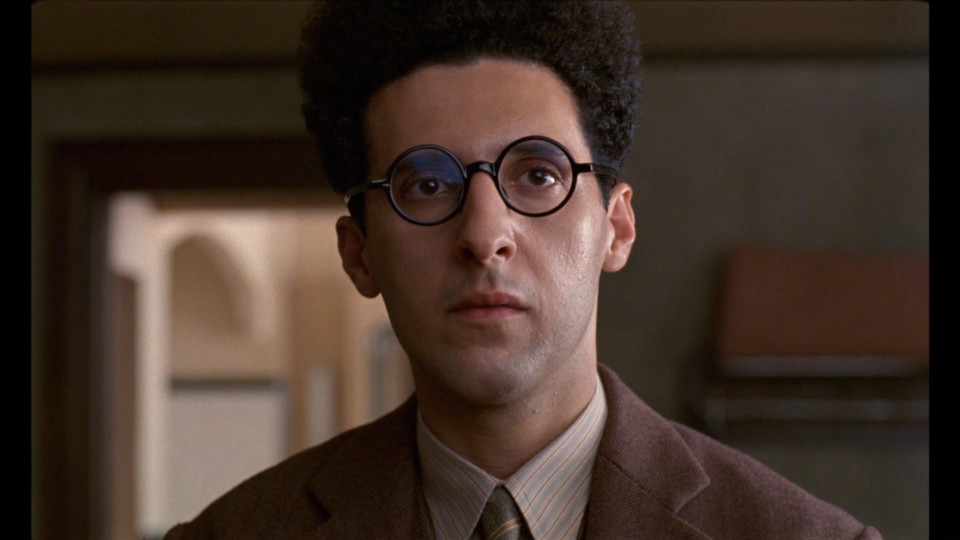
John Turturro in Barton Fink

Previously: An all-too-familiar utopia
Next: Flaubertian three-dimensionalism

From a novel-writing perspective, 2018 and 2019 was a creative interregnum. After publishing Hagar’s Mother in late 2017, I found myself juggling energy between two books. One was the third installment of the Bridge Daughter series, the other a futuristic detective novel where society has essentially become a giant social media simulation. While working on the former, 2018 fizzled away with a fearful lack of progress. As 2019 marched on, a slow panic developed inside me. Would I burn off a second year with nothing to show for it?

I learned a hard lesson: Writer’s block is real. Before this, I’d read articles by well-known writers who either denied it existed, or called it a semi-phony condition covering for laziness. The cure for supposed writer’s block, they explained, was to turn off your Internet, silence your phone, and write.

The early chapters of the Bridge Daughter sequel emerged in fits and spurts. Like a teenager learning how to drive a stick shift, I couldn’t find second gear and launch the story forward. Eventually I admitted that I’d hit something like writer’s block. I recalled what the Coen Brothers did when they were blocked developing Miller’s Crossing: They wrote a movie about writer’s block, Barton Fink.

While I didn’t go that meta, I used the problem to pivot to my science-fiction detective novel. Encouragingly, I was far more productive. It was also a much longer story. As a tightly-wound mystery, it was vital the chronologies of the different characters matched up, as story events were occurring in the background that the detective only learned about later. This required a fair amount of revision to clean up and synchronize.

The pivot did unblock me, and in a big way. During a stay in Tokyo at the end of 2019, I finished the remainder of the third Bridge Daughter book over a six-week sprint. Unlike the grind of the detective novel, Stranger Son spilled forth all at once. It and In My Memory Locked were published in 2020.

Photo of cappuccino with leaves drawn in the foam
Cappucino by Scott Rocher (CC-BY-NC 2.0)

The other writing outlet I used over 2019 to break my writer’s block was this blog. It’s no surprise my focus that year would be on the writing process itself. I blogged about keeping a writing notebook on your phone, story revision, story structure, and even on (bad) cover letters. Basically, any problem I faced while writing, I at least attempted to compose a post about it. (Most were never published, trapped forever in my blog software’s Drafts folder.)

So desperate to write anything to keep the blood flowing, I even wrote about writing in cafes. It couldn’t have been more flagrant: Sitting in a cafe, desperate to jump-start the creative engine, I started writing about what I saw around me. What began as a lark grew into a lengthy diatribe on the different cafes I’d written in over two-and-a-half decades, and the varieties of cafe patrons and owners I’ve had to put up with.

The cafe I wrote that post in was near-perfect for my writing habit. Plenty of seating, open late, electrical outlets, free Wi-Fi, good drinks, good food, reasonable prices, a cozy college student vibe—and a mere one block from my apartment. That’s why at the end of the post I didn’t reveal its name. I feared it would be discovered and ruined.

Well, not long after posting, the cafe changed owners. One by one, the wonderful perks disappeared, prices crept upwards, and hours were reduced. By the end of 2019, I was on the hunt for a new cafe.

A few months later, my preference for writing in public spaces would become a very distant problem.

A quarter-century writing in cafes

A quarter-century writing in cafes

cafe(友光軒) by voo34oov (CC BY 2.0)

I’ve spent twenty-five years writing in cafes. For a quarter of a century, I’ve attempted to produce passable fiction within the thin caffeinated air of Bay Area coffeehouses. I’ve endured countless hours of crummy music blasted overhead by baristas with something to prove—coexisted with hundreds of cafe patrons as neighbors, each with differing notions of privacy and personal space—suffered wobbly cafe tables and seats as hard as steel—and consumed gallons upon gallons of coffee, steamed soy milk, and espresso shots—all in the name of writing books someone might want to read.

My first foray into the writers’ cafe subculture came in the mid-1990s with the purchase of a Fujitsu laptop computer. This machine freed me from writing on a desktop PC-compatible occupying the corner of my bedroom. This freedom gave me a way to find a neutral place to get writing done—a place neither the home nor the office.

Cafes back then were largely for drinking coffee and reading a newspaper or book. Writing, when it was done at a cafe, was performed with pen and paper. The parallel advents of cheap personal notebooks and wireless Internet rewrote the cafe landscape in America, morphing the coffeehouse from a casual light-fare experience to a pseudo-shared office for the creative class.

Any writer will tell you, finding a good writing cafe is a cherished gift. Every change-of-address I’ve made over the last twenty-five years was always followed by long days of stumbling from one neighborhood cafe to another in search of the right one—the mother lode, Nirvana, the comfortable and welcoming writer’s cafe. Even when traveling abroad I make a point of finding a local cafe for writing.

As such, I’ve written in so many bad cafes I cannot begin to categorize them—but I’ll try.

Where to begin? There are the noisy cafes, the cafes where the baristas play Dave Matthews so loud I cannot hear my own music, even when I press my headphones tight against my ears with my palms. There are the cafes I can never find a seat in and must ask to share a table. Most creative types seem to find this burden distasteful and will invent an invisible friend joining them shortly, so, sorry, I’ll need to sit elsewhere.

There are the overpriced cafes. There are the cafes with rock-hard high stools seemingly designed by 1970s McDonald’s interior decorators. There are the cafes that are too hot, even in the winter. Here in San Francisco the opposite is largely the case, the cafes where the owner props the door wide open no matter how cold it is outside, allowing chilly breezes to charge inside at sporadic moments.

Clocking in years of cafe time taught me never to tell to anyone sniffing around me that I’m writing a novel. Doing so only elicits all manner of unproductive responses, from snarky to nosy to rude to inane. More than once I’ve had to pry myself away from a chatty cafe patron who, delighted at my endeavor, felt compelled to describe to me all their book ideas. (Sometimes they offer to let me write their book—”We’ll split the profits fifty-fifty.”) In an otherwise wonderful cafe in Campbell, a regular got his tenterhooks so deep into my work I would startle to find him crouched behind my chair peering over my shoulders to watch me write.

I’ve seen tip jars stuffed full of bills ripped from counters, the thief racing out the door with coins clanging across the floor in their wake. I’ve seen notebook computers swiped off tables while the patron was still typing and likewise rushed out the door. I’ve written in cafes decorated like giant doll houses, cafes decorated like discount clothing stores, and cafes so meticulously decorated I felt I’d entered a movie set. I’ve seen a darkened cafe in San Francisco arranged like a ziggurat with staggered levels of cafe patrons seated facing you as you enter, every one of them typing furiously on their MacBooks. The uniform rows of the backlit Apple logo could only remind me of the 1984 Super Bowl commercial.

There are cafes that cap their electrical outlets to force laptop owners to run on battery power only. There are cafes that employ exotic WiFi systems that only give you so much time online before you must buy another drink or pastry. Some cafes are too-brightly lit, making one snow-blind in the evening hours, and some cafes are so dim you cannot see your hands on the keyboard. There are the cafes that close early, eliminating prime evening-hour writing spurts, and there are the cafes that don’t open weekends for mysterious reasons.

I’ve been in cafes where the owner would assure me I could pay anytime before leaving—and then grouse I never paid for the first coffee when I return to the counter for a refill. I’ve been in cafes where the owner relentlessly pushed a food purchase on me. I’ve been in cafes with owners who grumbled under their breath about people not buying enough coffee or staying too long.

The Slate.com feature “My coffeehouse nightmare” is the Platonic example of this type of owner. He served his coffee “on silver trays with a glass of water and a little chocolate cookie,” hired a Le Bernadin baker to produce specialty croissants, and thought the fast-track to coffeehouse profits was pulling Vienna roast espresso shots instead of Italian. In six months, his cafe was out of business. “The average coffee-to-stay customer nursed his mocha (i.e., his $5 ticket) for upward of 30 minutes. Don’t get me started on people with laptops.” By which, of course, he means people like me.

Cafes hold a unique position in American culture. They straddle commercial and social divides. As a cafe patron, you are engaging in commerce with the owner and her staff. On the other hand, you share a quiet, almost intimate, personal space with other patrons, perfect strangers often seated less than a foot away. Unlike a movie theater, where all are sharing a common experience, cafes are a collection of private moments (reading a book, engaging in conversation, outlining a novel) hosted within a shared public situation. At the risk of romanticizing it, successful cafes are places where both halves—the commerce and the social—are well-balanced. Failure, I’ve always found, is where such balance is missing.

My personal code of cafe ethics? Always buy something. Don’t bring in outside food or drink. Tidy up the table before leaving. Don’t hog the electrical outlet. Voices down and phone calls outside. Please and thank you carry a lot of water in any situation, social or commercial.

What cafe do I recommend for writing? The one I’m sitting in right now. And, no, I’m not telling you its name.