In John Updike’s Picked-up Pieces, he expounds on his personal rules for reviewing books. I’m quoting them here to remind myself of this hard-won wisdom as well as to share with others:
John Updike
Try to understand what the author wished to do, and do not blame him for not achieving what he did not attempt.
Give enough direct quotation—at least one extended passage—of the book’s prose so the review’s reader can form his own impression, can get his own taste.
Confirm your description of the book with quotation from the book, if only phrase-long, rather than proceeding by fuzzy précis.
Go easy on plot summary, and do not give away the ending.…
If the book is judged deficient, cite a successful example along the same lines, from the author’s oeuvre or elsewhere. Try to understand the failure. Sure it’s his and not yours?
To these concrete five might be added a vaguer sixth, having to do with maintaining a chemical purity in the reaction between product and appraiser. Do not accept for review a book you are predisposed to dislike, or committed by friendship to like. Do not imagine yourself a caretaker of any tradition, an enforcer of any party standards, a warrior in any ideological battle, a corrections officer of any kind. … Review the book, not the reputation.
I write reviews on this blog. Have I followed Updike’s commandments? Most are familiar to me in a hazy internalized way, even if I’ve not formalized book reviewing rules of my own. I confess guilt to giving away the ending of at least one book (a mystery novel, no less). And I could probably do better in my reviews with quoting the source material.
We live in a time of constant media negotiation. We’re not consumeristic readers any longer. With the Internet we’ve all become critics. Film review sites allows moviegoers to pan movies, even pan them before they’re released. We’re saturated with media and we’re saturated with criticism too. Updike’s rules may serve a newfound purpose: A way for us to judge criticism rather than accept it uncritically.
Usually I’m reticent to pre-announce, but I’ve been getting emails, so…
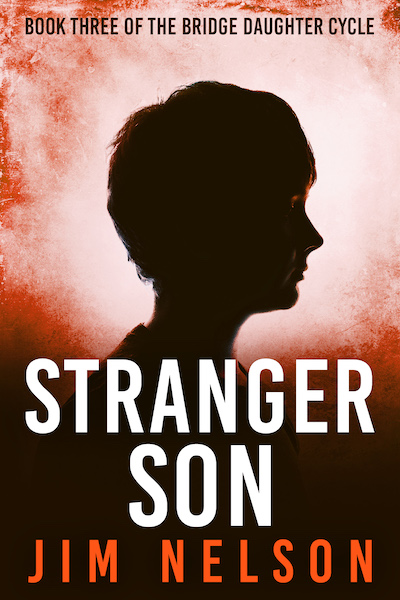
Today I sent the third book of the Bridge Daughter Cycle, Stranger Son, off to the copyeditor. I’m getting covers and other material assembled as I write this.
Stranger Son picks up sixteen years after the conclusion of Hagar’s Mother. I don’t want to spoil too much, but will say it takes place in a near-future California after a bout of political turmoil.
If you’ve not read Bridge Daughter or Hagar’s Mother yet, you can dive in now and (fingers crossed) be caught up in time for the third book’s release.
No release date at the moment. Watch this space for more news.
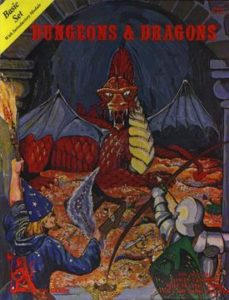
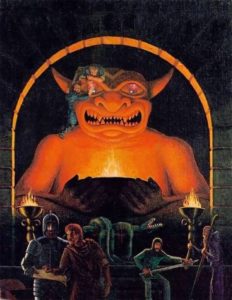
Writing about Monsters and Manuals and rereading the abandoned Dungeons & Dragons blog Grognardia led me to think about a few more D&D-related topics, like dice and randomness.
All those funny-shaped D&D dice, subject of endless mirth and memes, serve a purpose quite different than moving a pawn around a playing board. D&D’s reliance on chance for story events—combat, encountering monsters, dealing with hirelings—represents an
embrace of events beyond your control as an integral part of the gaming experience…the ‘story’ arises from the synthesis of design, randomness, and reaction; it isn’t something you can set out to create.
While Gygaxian Naturalism may make D&D like playing within a fiction, there is no single author of the story. In any D&D session there’s the referee, the players, and the dice. The dice are the third team on the field.
Even the referee is subject to the winds of chance. If she dispatches a band of goblins at the players intending a slaughter, bad dice rolls on her part (or good rolls on theirs) may thwart her plans. Even if she tries to assist the players through a rough patch, the dice may decide otherwise. A novelist can put an authorial thumb on the scales to tip fortune toward or against his character. In D&D, the referee doesn’t have the same absolute freedom.
That’s not to say D&D is a game of mere luck. The referee and players make most of the decisions throughout the game. Gygax wisely corralled dice rolls to specific situations, containing their entropy to key decisive moments. (The history of D&D’s polyhedrons—originally, all were Platonic solids—is an interesting story in its own right.)
Everyone who plays D&D long enough develops a futility toward the capriciousness of the dice. Take away the dice, though, and you have something that’s not D&D.
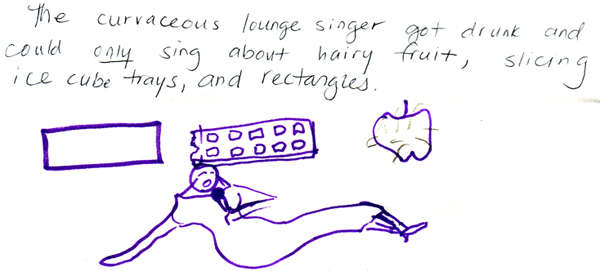
Combining cooperation with chance reminds me of exquisite corpse, where multiple artists contribute portions to the final picture, even though none of them are permitted to see the rest of the page until the drawing is completed. The obvious difference is that in D&D the story’s contributions are guided by dice rolls rather than obscuring the page.
Introducing cooperation and randomness to the creative process isn’t cheating, it’s adding more creativity. Embrace “the synthesis of design, randomness, and reaction.” These small chaos-es release the tight grip our ordered minds wish to exert over our creations, that impulse to micromanage every little detail of a short story or novel. Such creative games also fine-tune the internal “lighting rod of inspiration” I’ve written about before by introducing elements out-of-the-blue we may not have considered otherwise.
My previous posts on the blogs Monsters and Manuals and Grognardia led me to look back on Dungeons & Dragons, a game whose influence on me is pronounced, even if I haven’t played it since I was a teenager.
One topic blogger James Maliszewski explored in depth was “Gygaxian Naturalism,” his term for D&D’s co-creator Gary Gygax’s aesthetic sensibilities:
The intention behind Gygaxian Naturalism is to paint a picture of a “real” world, which is to say, a world that exists for reasons other than purely gaming ones. The implication is that monsters have lives of their own and thus go about their business doing various things until they encounter the player characters. … I don’t mean to imply that [D&D] is realistic in any meaningful sense, only that its fantasy follows “natural” laws of a sort, much in the way that, for example, I know that there are squirrels and raccoons and rabbits in my neighborhood who go about their business when I’m not seeing them in my yard or chasing them away from my recycling bins.
Before Grognardia I’d never heard anyone describe D&D as naturalistic, and yet the moment I read this post I knew exactly what Maliszewski was referring to. Gygax breathed an internal logic into his game. His fantasy world is a dynamic and mutable place rather than a static backdrop.
The creatures that inhabit this fantasy world don’t merely exist as wooden cut-outs in a shooting gallery. They coexist within an ecosystem. Minotaurs prefer solitary existences while goblins live in tribes. There’s a pecking order. In Against the Giants, the players discover the Hill Giants answer to the Frost Giants, and the Frost Giants answer to the Fire Giants…and all the giants answer to the elves underground.
Gygax’s The Village of Hommlet is an exemplar of D&D naturalism. The village is a medieval Winesburg, Ohio of nosy innkeepers and petty intrigues and split alliances—oh, and there’s an evil-worshiping death cult ten miles outside of town. One reviewer notes Hommlet “is a place with history and its history shapes and affects its layout, mood and inhabitants.”
Those inhabitants don’t exist merely to impart exposition or direct the adventurers to the dungeon entrance. They have ambitions, suspicions, and secrets. They share useful and baseless rumors. A widower farmer and his spinster daughter live in town. They are the black sheep of the village and not well-liked. They’ve stashed seventy-three silver coins in the hollow of a tree—there could be a story within all these details, a story within the larger story. Another farmer’s son likes his brew a bit too much and will wag his tongue if drunk under the table, while the town brewer’s nephew can hold his ale and then some. One elderly farmer is ex-military but would rather talk about any matter other than fighting. More question marks, more history.
And yet, it’s possible, even likely, none of these inhabitants or their situations will be faced by the players. Like Hemingway’s iceberg, Gygax’s inclusion of these details make the setting richer even if little of it is presented in-game. The players may never meet the farmer’s daughter, they may never drink at the inn, and they may never become involved in Hommlet’s inner squabbles. But if these details do become relevant, the game referee is expected to honor the villagers’ best interests and play to their strengths and weaknesses the way a character actor might develop a backstory for his brief role.
How does this correspond to naturalism in literature, especially American literature? In work like McTeague or The Awakening, characters are cursed to accede to the drives of base instincts rather than follow established civilized norms. Greed is innate. Lust cannot be tamed. (Brew cannot be avoided.)
Naturalism presents “nature as an indifferent force acting on the lives of human beings.” Gygaxian Naturalism certainly meets this criteria. Man is of no concern not only to animals, but also bugbears, dragons, and gods, demigods, and demons. The infamous D&D dice act as passionless Fates that hold the players’ futures in their hands. The players start as insignificant creatures in the great chain of being, only becoming a problem when they burst into a lair bearing swords and torches. A player character’s death is mourned by few, if anyone.
In the introduction to The Village of Hommlet, Gygax writes “there are wheels within wheels in Hommlet and the lands around, and behind each character there is another, the circles growing wider and the figures shadowy but very powerful.” It’s not deep, nuanced stuff, but it’s enough sophistication to give players a lurking sense they are but minor actors in a larger drama. Gygaxian Naturalism is a big reason why playing D&D felt like acting within a story rather than playing a sword & sorcery video game sans computer.
Last time I wrote of my praise for Monsters and Manuals, a long-running blog on role-playing games. How I came across Monsters and Manuals is a story itself.
In 2012 I somehow found myself reading a now-defunct Dungeons & Dragons blog called Grognardia. Now, I haven’t played D&D since Ronald Reagan was president, although I was active in the game throughout the 1980s. Why I came across the blog is long-forgotten to me, but there I was reading about D&D in theory and operation.
Grognardia was a bit of a revelation: People—adults—were still playing D&D, even after the rise of the Internet and smart phones and hellaciously ambitious video games. For years I’d thought back on D&D as an odd teenage avocation of mine, a 1980s trend that faded with Rubik’s Cube and glam metal. For me in 2012, the image of four to eight people around a table with paper and pencil rolling saving throws was a sepia-tone daguerreotype of a more innocent age. Now I know better. D&D (and role-playing in general) has changed and evolved, but it’s still going strong.
Reading Grognardia for the first time made me feel like Mel Brooks’ 2,000 year-old man stepping out from a 33 A.D. time capsule and discovering people are still abuzz over that Jesus guy. I lost contact with D&D after 1987 (or so) and Grognardia was my re-introduction to the community. Amazingly, I found the community was talking about the state of D&D prior to 1987.
Reading Grognardia’s love-letters to Gary Gygax, co-creator of D&D, and its many tributes to old-timey role-playing was a massive syringe injection of nostalgia. Reading closely, I deduced blogger James Maliszewski was about my age and had been introduced to D&D around the same time I was (the late 1970s).
Grognardia gave Maliszewski a platform to lay out his dim, gimlet-eyed views of the state of D&D in the 2000s. In fact, Maliszewski held a pretty dim view of all things D&D after about 1983. (“Dragonlance Ruined Everything”, “I Hate Change”) His scheme of D&D’s eras has the game exiting its Golden Age before 1983 and waving goodbye to its Silver Age around 1989. From there, in Grognardia’s estimation, Dungeons & Dragons was downhill.
Maliszewski’s writing is forceful, lucid, and mostly consistent. The early Grognardia posts were manifesto-like, each chiseled from a bedrock belief in old-school D&D, each post a brick set in mortar like a fervent parishioner building a country church by hand. His brimstone sermons on original intent and calls for a return to the soil earned him a wide fan base at his blog’s height a decade ago.
Alas—and you probably saw this coming—cracks in his reputation began to appear not long after I began reading his blog. (Like most Internet dramas, it’s a mildly complicated story and better explained by him and others.) Grognarida ceased updates soon thereafter, and I so searched for a replacement blog to fill the nostalgic void. That’s how I discovered Monsters and Manuals, which I’ve been reading ever since.
While writing my last post, I spent some time revisiting Grognardia. I’d not read it since my first encounter in 2012. The reread gave me a new appreciation for Maliszewski’s idiosyncratic but thoughtful perspectives. Back in 2012, his posts forced me to evaluate (and reevaluate) my memories of D&D and its impact and history. In my reread, I found myself returning to those evaluations once more.
I’m by no means a D&D insider, so my thoughts on the game may earn a collective yawn from the community, but I’ll record them in future posts in case they’re of interest to anyone.
Blogging suffered a cruel downturn this past decade, all but displaced by social media feeds and their 280-characters-or-less bumper stickers. That’s why I hold today’s bloggers in such high regard, particularly hobbyists and amateurs not drawing a steady income off their hard work.
One blogger I’ve followed through the downturn is noisms over at Monsters and Manuals, a site dedicated to Dungeons & Dragons and other role-playing games. I’ve been meaning to write this for a couple of years now but kept putting it off. Now is the time. His twelve-year-old blog celebrated its 1,500th post last August and he’s still cranking out entries. That’s impressive. Kudos.
(I haven’t played D&D since the late 1980s. How I discovered Monsters and Manuals will have to be the subject of another post.)
Much of my admiration for noisms is simply the dedication required in producing posts regularly for over a decade. He’s also done well to stay on topic (so many blogs wander off their chosen path to spout politics or shill product) without feeling straitjacketed to a single subject.
More than these reasons, I discovered in Monsters and Manuals a blogger with a fine-tuned radar for exploring creativity.
I recently picked up a collection of Orwell’s critical essays and was sucked in by his discursive writing style. Orwell seamlessly moves from one topic to another without ever losing sight of the essay’s primary focus. Reading Orwell dissect Dickens’ and Kipling’s politics is following a busy bee through a lush garden of orchids and varietals. There’s a similar dynamic at Monsters and Manuals. noisms draws from philosophy, linguistics, history, British culture, and more, all in the service of exploring what makes role-playing different from—and perhaps better than—other narrative forms.
Even in this hundred-word post on Super Mario Bros. as absurdist art, noisms drops something fairly profound for anyone writing a novel, play, or film script to consider:
In creating a long-lasting, interesting and innovative fantasy setting, then, I think the most important thing may well simply be to come up with, say, a dozen or so ideas, themes or tropes and make sure they appear consistently. What those ideas, themes or tropes are is probably of secondary importance to their repetitive use.
I would say that applies to all manner of story, not merely fantasy settings. All great work has an internal logic. Even if we don’t share its values, the pleasure is experiencing, even living within, that internal logic for a short period of time. (“A book is a pocket or portable dreamweaver.”) Repetition of themes or tropes reinforces the internal logic of a character, or an ethic, or a condition, or a world.
The point is simply this: once constraints are set in place, creativity starts to flourish. Envisage human creativity like water: without barriers it floods endlessly in a very thin and ever-spreading sheen. With constraint it bursts upwards like a fountain.
The best proof I can offer of Monsters and Manual’s wide peripheral vision is a role-playing game noisms developed called Behind Gently Smiling Jaws. Its premise: The player characters are exploring the dream-memories of an ancient crocodile asleep in a lake:
In its mind are memories of such antiquity that all trace of them have faded elsewhere in the world. Beasts long extinct whose bones are now dust. Spirits whose substance have gradually tattered and frayed down the eons until nothing remains. Civilizations which have risen and fallen and whose ruins are no longer even part of distant legend. Lands which have sunk beneath seas so deep that not even the kraken have seen them. The crocodile witnessed it all and those memories live inside it still.
As a setting for a game world, is it successful? I have no idea. But it’s so strange, so ambitious, so weird, I can only admire the effort.
[The players] might be dilettantes, scholars, satanists, priests, or alchemists. One of them inherits the study of a dead uncle or aunt who was clearly Up To Something. In this study is a portal, or portals, which lead to another World or Worlds…the existence of the other Worlds is also known by others, who will want to buy whatever the [players] can bring back, kill them as rivals, and so on…Picture a group of scholars from Regency-era London going to Athas and bringing back a cannibal halfling to sell to the Prince of Brunswick, all the while trying to avoid being noticed by their rivals, thieves, or high society.
What I love about this premise is how the off-world adventuring is not the only meat of the game. It’s also returning to 19th-century London with bizarre artifacts, finding a fence to move them, dealing with robbers and toughs, and navigating the powdered wigs jockeying for position around the Crown. Although set pre-Victorian, I can’t help but visualize the game as the formalism of H. G. Wells meets the street life of Dickens with The King in Yellow thrown in for measure—I don’t know if I want to play that game, but I would certainly like to read that book.
What I see in Monsters and Manuals is a writer who remains wide open to inspiration from traditional and nontraditional sources. I’ve discussed inspiration before, but I’ve neglected writing how to develop an internal “lightning rod” for inspiration: Maintaining an inquisitive mind that stirs loose subconscious, even primal, thoughts to the surface; not rejecting those ideas out-of-hand because they’re silly or or absurd or embarrassing or transgressive; and most importantly, recording everything for later.
It’s apparent to me noisms has developed a lightning rod for role-playing games—his creative mulch is music, countryside walks, philosophical treatises, news clippings, and more. Any writer would do well to do likewise.
What faulty thinking twenty years ago compelled me to pick up this doorstop is lost to me today. With no reading material on hand, in a Munich airport bookstore and facing a direct flight back to the United States, I probably thought Laurence Gardner’s beefy Bloodline of the Holy Grail (1996) was making the best of a bad situation.
Airport bookstores and newsstands are, by and large, a waste of time for me. Most of them stock novels riding high on the New York Times bestseller list, self-help guides, business books for business people looking to maximize their potentialities, and a smattering of classic thrillers perpetually in-demand. (The Girl with the Dragon Tattoo books seem to fit this last category.) I rarely find a book worth reading among their stacks, but that hasn’t stopped me when I’m desperate for a way to pass this time midair.
Bloodline of the Holy Grail fits the bill as a long-flight read due to its sheer bulk. Chewing through its four hundred and fifty pages to pass the time on a red-eye is a solution…assuming you’re willing to suspend critical thought and rational consideration.
Bloodline is a repackaging of the more widely known Holy Blood, Holy Grail (1982), the sprawling pseudo-historical conspiracy theory disguised as academic research. The bare-bones outline of Holy Blood, Holy Grail was lifted by Dan Brown as background for his thriller The Da Vinci Code (2003), which resulted in a lawsuit against Brown. Laurence Gardner undoubtedly cribbed Holy Blood for Bloodline as well, although toward different ends.
The three books arepremised on the idea that Jesus did not die on the cross, but was rescued by his followers and resuscitated without the knowledge of his Roman executors. The notion of Jesus surviving his crucifixion is not new. What’s new is to weaponize it into an attack on these books’ favorite targets. In the case of Holy Blood, it’s the Catholic church. In the case of Bloodline, it’s the British royal family.
According to both books, Jesus survived his crucifixion, married Mary Magdalene, raised a family, and anonymously died of natural causes. Mary and children sailed to France and established what became the Merovingian dynasty—that is, the foundation for all major royal lineages in Western European. You read that right.
Bloodline spins out of control from there, as though it wasn’t reeling fast enough. To connect Jesus’ bloodline to the major European monarchies, Gardner rewrites two thousand years of Western history with a horse-breeder’s attention to genealogy. He even injects into his pseudo-history figures of Biblical and Arthurian legend, presenting them as living, breathing persons instead of the fiction they are. The Holy Grail on the cover of the book? Gardner drops the canard where the word San Greal (Holy Grail) is a corruption of Sang Real (royal blood), another longstanding bunk theory unsubstantiated by the historical record.
Up to this point Bloodline tracks closely to Holy Blood, Holy Grail. I was not aware of the latter book when I was on my flight, and The Da Vinci Code had yet to be published. Although I bought into none of Gardner’s hogwash, I was thoroughly impressed with his conviction and persistence. It’s much like Oliver Stone’s JFK, another ripping yarn I relish in repeated viewings whilst my intellect whispers in my ear: Factually, this is all crap. When Da Vinci Code became a hot ticket, I was convinced Dan Brown had ripped off Laurence Gardner, not knowing Gardner had, in turn, ripped off the earlier source. Lots of pigs have fed at the trough of Holy Blood, Holy Grail.
On my flight I found myself thumbing ahead, skipping page after page of Gardner’s tedious and picayune revisionism. Like the high-minded JFK conspiracy theory books of the 1970s, Bloodline is chock full of footnotes and references to historical research. And, like those JFK conspiracy books, the tornado of references serves to obscure the questionable, if not dishonest, interpretation of that material.
Michel Roger Lafosse
Bloodline comes to a crashing conclusion when it declares the current royal family of Britain are illegitimate throne-bearers. Gardner announces the proper King of Scotland (and direct descendant of Jesus Christ!) is HRH Prince Michael James Alexander Stewart, a Belgian named Michel Lafosse who contends he’s the head of the Royal House of Stuart, a lineage otherwise considered extinct. With only a few more pseudo-historical yoga poses, Gardner proves Lafosse should be the King of England as well.
That’s it. This entire four hundred fifty page book is an argument claiming some bloke is the rightful occupant of Buckingham Palace. Gardner concludes with a frosty condemnation of democracy and pining for return to a proper constitutional monarchy.
Author Laurence Gardner liked titles almost as much as Lafosse. Gardner was “Chevalier Labhran de St. Germain” and “the appointed Jacobite Historiographer Royal”—all bestowed upon him by Lafosse, who also showered invented titles on himself. The moment one learns of this incestuous relationship between the pretender king and his genealogist, the ulterior motivations behind this turd of a book crystallizes before your eyes. The Guardian scoffed at this circle jerk of title inflation as a “web of imposture,” an elegant phrase to describe a sad and delusional fraud.
Bloodline of the Holy Grail is the most exhausting shaggy dog story I’ve ever read (and I’ve read Tristram Shandy, the shaggiest of them all). It may also be the most ambitious vanity project ever mounted. To plow through so much dense mud and be handed such a smelly egg in the final pages almost led me to throw the book out the plane window as we were landing.
Still, Bloodline stands as the missing link between Holy Blood, Holy Grail and The Da Vinci Code—a historical thriller presented as dry fact, opening in the ancient Holy Lands with a botched crucifixion, and culminating with a modern-day secret king denied his crown. If Gardner had been more entrepreneurial-minded and abandoned his penchant for toffee-nosed honorifics (“Prior of the Sacred Kindred of St. Columba”? “Attache to the Grand Protectorate of the Imperial Dragon Court, 1408”?), he could have pumped Bloodline into a full-blooded 1990s thriller and beaten Dan Brown to the winner’s circle by nearly a decade. After all, the public has shown a bottomless appetite for Bible conspiracies and Holy Grail histories. How many metric tons of trees have been ground to pulp to distribute this sort of crap worldwide?
Recommended for a long flight? Go reread The Girl with the Dragon Tattoo instead. Better yet, read Kazantzakis’ The Last Temptation of Christ to involve yourself in the life of a Jesus more fragile and human than any conspiracy writer could devise.