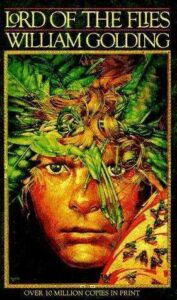
With the release of a new Netflix adaptation of William Golding’s Lord of the Flies comes another round of media reminders that the book’s most famous plot element—shipwrecked children turn barbarously violent—was “disproven” fifty years ago on an island in the South Pacific.
The logic goes something like this:
In 1965, six Tongan teenagers were shipwrecked on ‘Ata, an uninhabited island on the southern tip of the Tonga archipelago. Rather than descend into savagery, as the children do in Lord of the Flies, the Tongans managed to survive and form a communal-like existence. They shared duties, gathered food, kept spirits up, and even tended to one another, such as setting one’s boy’s fractured leg. After fifteen months, they were rescued and returned to their families.
The story of the Tongans has grown into a modern parable warning against taking Golding’s book seriously, or even discarding it outright. One example comes from a recent article, where Lenore Skenazy recounts the Tongan success story with the brisk conclusion, “So much for barbarism.”
The popular linking of the true-life Tongan incident with Golding’s novel appears to have started with Dutch historian Rutger Bregman. His 2019 book Humankind: A Hopeful History sets out to prove that people are fundamentally decent and eager to build a better society. Whatever Golding’s fictional account may depict, he says, real children do not become wild, bloodthirsty creatures once they’re removed from the watchful eyes of civilization.
Bregman followed his book with a 2020 Guardian article headlined “The real Lord of the Flies: what happened when six boys were shipwrecked for 15 months.” The story went viral on social media, leading to years of articles repeating his thesis. A sampling of subsequent headlines shows they even mirrored the Guardian‘s, almost down to the word:
- “The Real-Life Teenage Castaways Who Proved ‘Lord of the Flies’ Wrong”
- “The Real ‘Lord of the Flies’ Turned Out Very Differently For The Young Boys Trapped on an Island”
- “The Real-Life Version of “Lord of the Flies” Has a Happier Ending”
- and Skenazy’s recent “The Real Lord of the Flies Story Netflix Isn’t Telling”
Since the Tongan teenagers didn’t turn against each other, the logic goes, Lord of the Flies has been proven wrong. It’s as if we should discard the lessons of Animal Farm because there exists not one recorded episode of farm animals forming an authoritarian Marxist collective.
The best at everything
As Scott Alexander writes, “Beware the man of one study.” A single example that ends well does not slam the door on Golding’s book, and it’s pretty sad that so many people think it would.
But if one example is proof positive, is a single counterexample dispositive? Consider the Sugamo child abandonment case. In 1988, a mother left her four young children alone in a Tokyo apartment for nine months. No, they weren’t shipwrecked like the Tongans or the Lord of the Flies boys—but that’s kind of the point. The children had modern shelter, clean running water, and easy access to food, which they procured from local convenience stores using money the mother had left for them. The children did a remarkable job of taking care of each other, but it wasn’t enough.
When finally discovered by social workers, they were malnourished, and one of the children was missing. The eldest boy admitted that two of his friends had assaulted and killed the youngest girl. While the eldest boy was not present at the killing, he helped his friends bury her body.
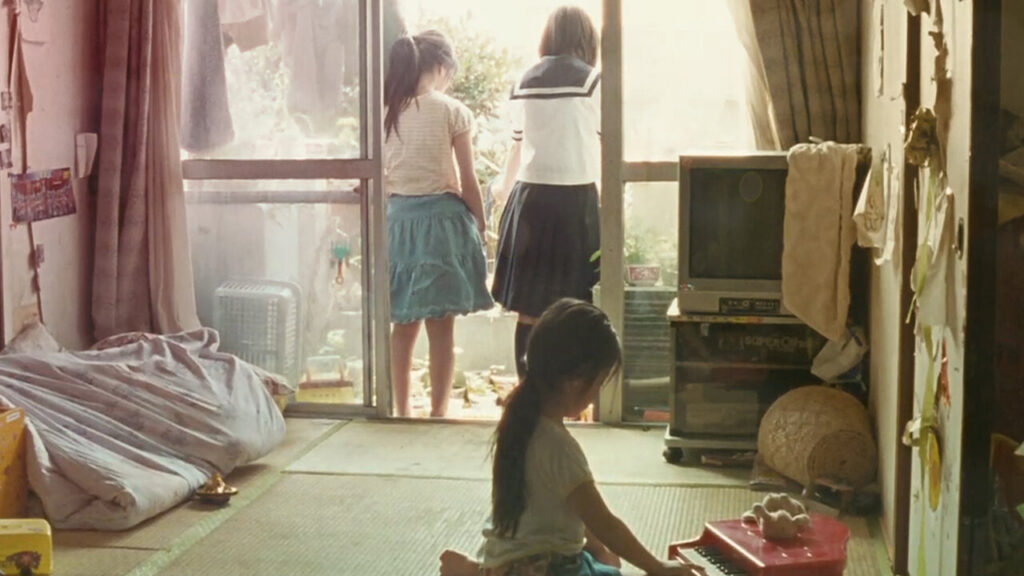
When reports reached the public, the response in Japan mirrored an underlying question posed many times in Lord of the Flies: “How could Japanese children be reduced to this behavior?”
In Lord of the Flies, it’s the English who are puzzled: “I should have thought that a pack of British boys…would have been able to put up a better show than that,” one character remarks at the end of the book. The boys were raised well and taught in boarding schools. Each had a reading diet of British Empire adventure books about self-sufficient boys who always act as proper young gentlemen, even in the face of adversity. “We’re English, and the English are best at everything,” young Jack declares, a statement which turns out to be surprisingly empty by the final chapter. “The northern European tradition of work, play, and food right through the day, made it possible for them to adjust wholly to this new rhythm,” the narrator of Lord of the Files declares, another statement emptied of meaning after only a few pages.
After all, the book most often named the first prose novel in the English language is none other than Robinson Crusoe, a story about a shipwrecked Englishman surviving due to self-discipline, routine, and his education. Crusoe was written for adults, but over the years it developed a younger audience. It also became a model for how every Englishman should act under duress.
It’s not hard to imagine Ralph, Jack, and the others reading Crusoe while in school. Yet Golding’s book feels like a rebuttal to Defoe’s classic, tearing down its colonial-era pride with cool precision.
“How can you be surprised that Tongans survived on an island?”
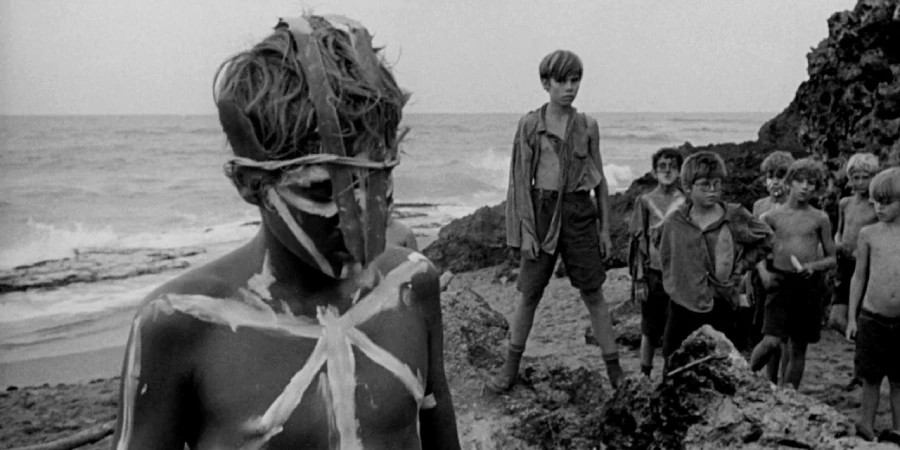
Contrary to popular depiction, the children in Lord of the Flies don’t immediately descend into barbarism. Upon their arrival on the island, the boys formulate rules, coordinate efforts, and develop routines, just as their boarding school education taught them. They choose a leader in the fair-haired (and fair-minded) Ralph, who sets about in assigning duties. He even leads the boys in building a signal fire atop the island’s sole mountain, exactly as the Tongan boys did.
The Tongans numbered six teenagers, aged 13 to 19. They were friends at a Catholic school. They ran away, gathered food and supplies, and stole a boat. That is, they were working together before they even reached the island.
In contrast, the number of children in the book is not stated with precision, but it’s likely close to twenty or thirty. The children do not know each other, and none are pubescent. The “littleuns” are so numerous that, after the mountaintop fire grows into an inferno, the older children are unsure if one of them perished in the blaze.
Two months after Bregman’s story in the Guardian, Tongan Meleika Gesa penned a rebuttal arguing the boys of ‘Ata were not the “real” Lord of the Flies. Gesa explains how Tongan values and education prepared them for survival. Not only did they know how to start a fire and catch and prepare fish, the Tongan culture instilled a familial cohesion among the group. There’s no such unity among the boys in Lord of the Flies, save for their nationality.
Amusingly, Gesa asks, “How can you be surprised that Pasifika people, specifically Tongan, can survive on an island?”
The Guardian article claims Bregman “unearthed” the forgotten story about Tongan teenagers on an island, like a paleontologist discovering a new fossil. Gesa points out the story of the teens is well known among Tongans, and not forgotten at all.
Gesa has more complaints about the way Bregman presents the story, but the overarching tragedy is that Bregman’s, not Gesa’s, account dominates public perception. “While the boys of ‘Ata have been consigned to obscurity, Golding’s book is still widely read,” Bregman wrote in 2020. That’s not so true today.
Realism and literalism
In the 1950s, William Golding wrote that Lord of the Flies “is an attempt to trace the defects of society back to the defects of human nature. … The whole book is symbolic in nature.” (Emphasis mine.)
That Lord of the Flies is a parable constructed with symbolism and metaphor, and not a detailed, realistic account of children on an island, seems incredibly obvious to me—and yet, here we are, with people treating the book as a failed thought experiment.
We all seem to agree that society is defective—otherwise, we wouldn’t spend so much time arguing over politics, policy, and taxes. If society’s defects don’t emerge from defects in human nature, where else would they come from?
I see little evidence in the world that people’s natural instincts are to work together, avoid conflict, and live peaceably side-by-side. If anything, much of our modern existence is spent pushing against those social norms. Modern culture treats every little interaction as a zero-sum transaction, which concludes with one party the winner and the other the loser. Getting people to see humility, cooperation, and teamwork as being non-zero-sum—transactions where everyone wins—seems futile.
But can those social values—work together, avoid conflict—be taught? At one time, they were, via a humanistic education, religion, and active parenting—the same institutions Western culture has been discounting over the past fifty years.
So, have we adopted some system of moral instruction to fill the void? If so, I can’t locate it. What appears to have taken its place is the zero-sum thinking I mentioned above. With it came a kind of raw, undeveloped trust in Realism and Literalism, twin brothers of interpretation which frantically attempt to nail down, rather than open up, our understanding of human nature. By nailing down human nature into a flat and mechanical one, it opens up a self-justifying excuse for zero-sum thinking. Add to that our culture’s simmering anxiety of being taken for a chump, which appears to be one of our deepest fears. Way back when, if someone took advantage of another, the cheater was shamed.
William Golding wrote, “The moral [of Lord of the Flies] is that the shape of a society must depend on the ethical nature of the individual and not on any political system.”
Tongan Meleika Gesa wrote during the pandemic, “Just look at how we’re surviving Covid-19 together. My family have given away food to our neighbours and checked up on friends and family because that’s how we survive.”
Jack in Lord of the Flies says, “We’re English, and the English are best at everything.”
That’s the ethical and moral divide between the Tongan teens and the boys in Lord of the Flies. What follows for each group flows from within.


.jpg)