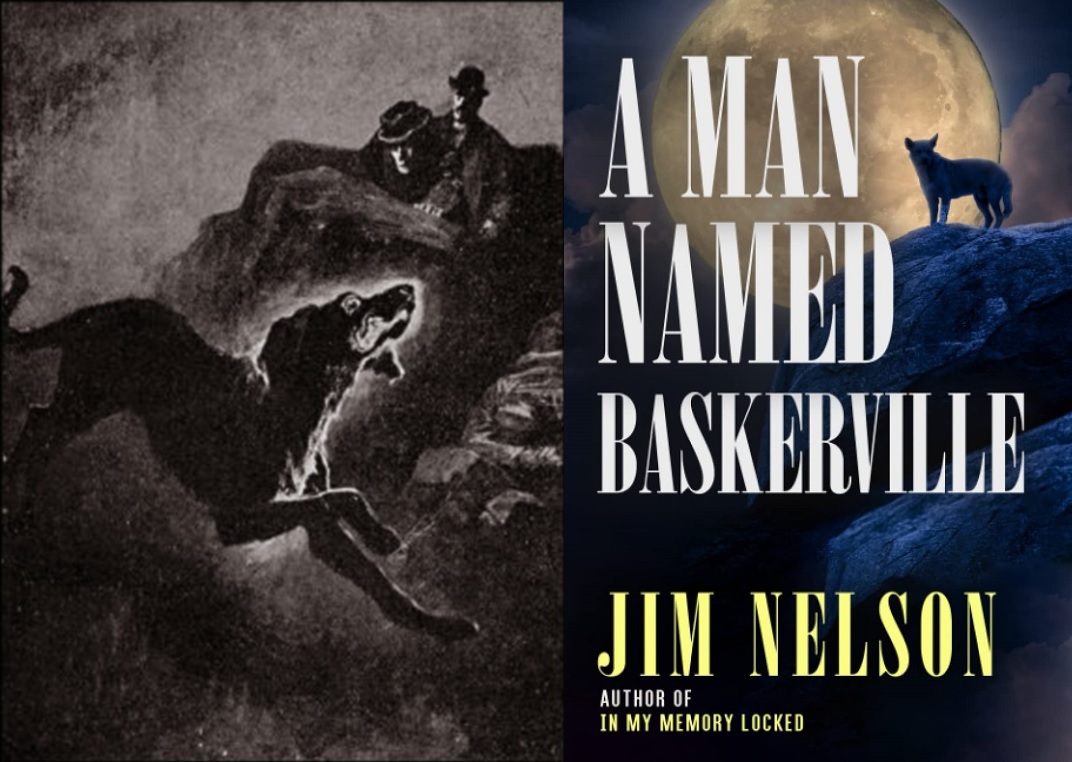
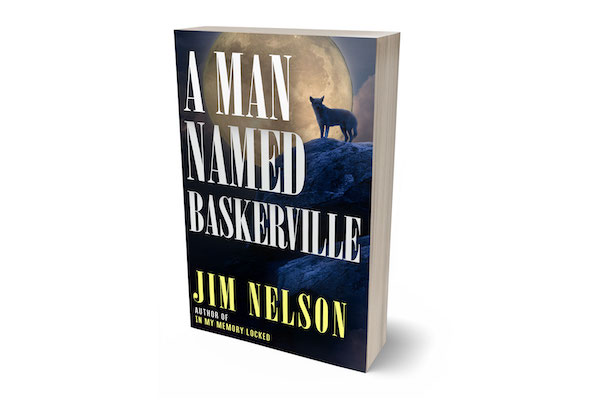
While this tale is intended to be Stapleton’s counter to what Watson’s published version of the events would be, it rather exposes a horror within that cannot be saved by the loyalty of a good friend, the love of a woman or the faithfulness of a dog.
The full review is here. More information on the book is here, including links for reading sample chapters in your browser.
If you’re a fan of science fiction, fantasy, and/or historical fiction, I highly recommend checking out her channel, where she offers patient and thoughtful views on a wide range of fiction. Thanks, Kayla!
[Note: The following is adapted and compressed from the afterword to A Man Named Baskerville. It reveals some details from the book. It also contains spoilers to the book it was inspired by, Arthur Conan Doyle’s The Hound of the Baskervilles.]
Years ago, while traveling Japan via its Shinkansen bullet train, I found myself without a book to read. An ebook reader I’d installed on my phone came with a free sample to whet the reader’s appetite. That book was Arthur Conan Doyle’s The Adventures of Sherlock Holmes, a collection of the earliest Holmes short stories. (I explore this incident in greater detail in my 2016 post “Sherlock by Train.”)
The collection stands as a record of a remarkably creative streak. So remarkable, if Doyle were to have stopped writing after its publication, we would still be talking about his literary creation and storytelling prowess. The titles of the stories within are as familiar as the books of the Bible: “A Scandal in Bohemia,” “The Red-Headed League,” “The Man with the Twisted Lip,” “The Adventure of the Speckled Band.” Perhaps the only missing short story title of comparable infamy is “The Adventure of Silver Blaze,” published in The Memoirs of Sherlock Holmes a mere two years later. In toto, they represent the height of Doyle’s powers and inventiveness.
None of this inspired me to write A Man Named Baskerville. As exciting and inventive as a great Sherlock Holmes story can be, never have I entertained the question that has dogged countless other producers of Doyle homages and pastiches: Could I write my own Sherlock Holmes story? Honestly, the thought has never crossed my mind.
After consuming the first collection in a rush of reading, I used the opportunity of a brief train stop and some free wireless Internet access to download more Sherlock Holmes books for our continued journey. I had read a little of Doyle’s work before, and never found much interest in it. They were too Victorian for my tastes, too concerned with Empire and upright decency and British morality. My California upbringing, and the plain-speaking tastes I inherited from my parents, led me to the hardboiled school of Chandler, Hammett, and Cain. Nathanael West’s grotesqueries and William Gibson’s cyberpunks are a better fit for me than Holmes’ Irregulars.
On that train ride, my interest in Sherlock Holmes kindled. Holmes may not have walked Chandler’s mean streets, but he did present a more compelling moral force than I’d sensed before. As with the hardboiled school, Holmes time and again must balance his own sense of justice against the British legal system’s notion of the same. Doyle wrote for an audience who would understand those boundaries implicitly. A hundred and ten years later, I viewed Holmes’ sense of justice through a different lens. This came to a point when my reading reached The Hound of the Baskervilles.
The book was first serialized in 1901, ten years after that auspicious run of early short stories. Doyle had killed off Holmes in “The Final Problem” (1893) hoping to rid himself of the literary creation upstaging all his other work. An appalled public demanded more stories featuring Holmes, and publishers increasingly pressured Doyle to satisfy the market’s cravings.
Inspired by a trip to Devon and its local folklore of wisht hellhounds roaming the countryside at night, Doyle produced The Hound of the Baskervilles. To avoid what we today call “continuity problems,” he retroactively dated its events to October 1888, three years before the publication of his earliest stories. This places the story square in the middle of the Autumn of Terror, when a serial killer dubbed Saucy Jack terrified London, while, across the Atlantic, the Empire of Brazil was warily beginning its dissolution.
One overlooked quality of Doyle’s writing is that his knack for concise storytelling in the short form executes equally brilliantly in the longer form. I’ve seen adept short story writers get fouled up when they attempt to tackle the novel. The pacing and breathing cadences that permit a runner to win the 100-meter dash do not sustain when attempting a marathon. Yet Doyle’s economical style holds up with Hound, making for dazzling quick cuts between crucial scenes, and exposition that does not lead the reader to impatiently flip ahead. Doyle had a gift for paring down prose to its vital emotional and informational elements without stripping it of that uniquely English sense of mood and atmosphere. One also sees in Hound Doyle’s assiduous control of pacing. The early chapters draw out their eerie scenes, while the closing chapters barrel headlong toward the conclusion. The movement becomes so breathless at the end, it takes pure inference on the part of the reader to detect scene changes.
Readers either love or hate this no-nonsense approach to storytelling. Either way, the final output of his opus on the moors is consistent with this quality, and obviously has held the public’s interest for well over a century.
None of this inspired me to write this book, either. I grew to admire Doyle’s writing while traveling by bullet train, but I never craved to imitate it. The first fourteen chapters of The Hound of the Baskervilles served to reaffirm my growing estimation of the man’s talents, but not to pick up a pen.
What did inspire me to write A Man Named Baskerville? The fifteenth and final chapter of the book it derives from.
All detective mysteries deal in sleight-of-hand. Keeping the perpetrator out of the narrative limelight until the moment the solution is announced is a tried-and-true technique for maintaining the element of surprise. In response, savvy readers have learned to guess whodunnit by evaluating how much “screen time” the author gives the suspects. The most obvious suspect is never culpable. The suspect we’ve read the least about is quite often guilty up to their eyeballs.
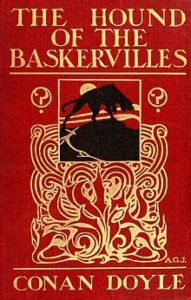
First edition of The Hound of the Baskervilles
And that’s pretty much the case in The Hound of the Baskervilles. The perpetrator is one we hear precious little about, an absentminded collector of butterflies and moths named Jack Stapleton who lives with his sister (the nineteenth-century equivalent to rooming in your parents’ basement, apparently). He’s not the least elaborated-upon character in the book, but he is pictured as far removed from the crimes and the curse of the Baskervilles. When Holmes and Watson finally suspect his guilt, Doyle spends no time speculating on his motivations in favor of keeping the story moving at a brisk clip.
Doyle knew the reader would eventually demand to know why Stapleton posed under an assumed identity to murder his uncle in such a contrived way, and then attempt the same on his cousin. To sew things up, in Chapter 15, Watson calls on Holmes to explain the background of Jack Stapleton. Holmes launches into fourteen pages of exposition, a matter-of-fact recounting of Rodger’s life from the New World to Devonshire, England.
Much detail is omitted, of course, but Holmes’ reckoning of Rodger’s life is a far more plumbed-out biography than I think any reader expected. After all, Holmes could have simply stated, “He was raised abroad and returned to England to kill his uncle and claim his estate.” Yes, that could be worded more artfully, but Doyle stretched himself to fill in the blanks.
I don’t know why Doyle felt the need to so thoroughly detail Rodger Baskerville’s life. I’m not sure anyone does. In my research for A Man Named Baskerville, I never located a definitive answer to the question. Perhaps in Doyle’s papers, or in a complete treatise on his life and work, an answer may be found. Perhaps it was a modernist faith in the triumph of reason—all things must be explained that can be explained—that led Doyle to stretch himself, much as he uses many pages to lay out the backstory in A Study in Scarlet and some of his short stories.
What I do know is, reading those seemingly superfluous fourteen pages of Rodger’s life struck me as a kind of boggy sinkhole in the tale. It felt Arthur Conan Doyle had wanted to write two books, Rodger’s life story and The Hound of the Baskervilles. Unable or uninterested in writing the first, he wrote the latter and included a précis of the former in the final chapter.
Fascinated, I made copious notes of Holmes’ reckoning of Rodger’s life. Later, I transferred and organized them on my computer. A bell tinkled in my mind, a Pavlovian reaction all writers develop: Is there a novel here? I let the idea stew. Holmes’ reckoning might appear a rich vein to mine, but once I started digging, it might yield little more than a couple of small gems.
And how would readers react to Rodger as a main character? Yes, everyone says they like stories about villains—but too often those so-called villains are more like lovable rogues or bad boys with a soft spot. Was I trying to humanize Rodger Baskerville? That’s exactly what a novel does: It humanizes. Would it be a Victorian “Sympathy for the Devil”?
Maybe, I thought, I should just write the damn thing and see what comes out of the keyboard.
I made a private agreement with myself: I would not write yet another pastiche of Sherlock Holmes, of which there are plenty to pass around. The book would be told in Rodger’s voice and not in imitation of Doyle’s Watson. Of course, that didn’t excuse me from the challenges of writing a historical novel, which include diction, grammar, tone of voice, colloquialisms, and historical accuracy. Nor could I write such a book without featuring Holmes and Watson at some point.
Mostly, though, my doubts centered on originality. Certainly someone had executed on this idea since the publication of Doyle’s book. Internet searches yielded nothing of the sort.
It became a secret too juicy to keep to myself: In the final chapter of The Hound of the Baskervilles, Arthur Conan Doyle embedded a working outline for a novel—a rousing novel, in my estimation—that had been overlooked for over a century. It took me five years to set aside my private doubts and write it.
Yes, it was exhilarating to liberally borrow from a master’s synopsis and expand it into this novel. No, having said synopsis to work from did not make my job any easier.
When I planned A Man Named Baskerville, I failed to see how a man with Rodger’s background would not bring to Dartmoor one or more Central or South American dialects along with his impeccable upper-class English accent. He would also bring with him a rich and varied New World culture as his starting point of reference.
Once in England, around his neck would be the weight of several albatrosses: His father’s suspicious exile; his “ethnic” upbringing and foreign tongue; his lack of secure income; his marriage to a dusky woman most un-Anglo-Saxon. Only his upper-crust accent would save him. It would work in the British Isles like a charge card with no spending limit. After all, he didn’t merely fool the English into thinking he was one of them; he fooled them into thinking he was better than most of them.
Freud’s narcissism of small differences is an underappreciated observation of the continuing human condition. As long as people lift themselves up by cataloging their differences with outsiders, there will always be Rodger Baskervilles walking among us.
Nelson’s style is convincing and engaging, and places his novel firmly shoulder-to-shoulder with the Sherlock Holmes canon. The attention to detail and careful references to the established course of events are striking, and the character of Baskerville is portrayed with startling humanity. By far best of all is the way Baskerville refers to Holmes and Watson, and those passages are delightful to read.
This well-researched, carefully crafted, and absorbing read will delight mystery aficionados and Sherlock Holmes fans, and would very likely give Doyle himself immense joy, not least of all for the treatment of his storied detective. “It’s time someone said it,” he would surely exclaim.
I’m blushing! Check out the full review is at My Murmuring Bones, along with Viktorija’s other reviews of books and film.
Having a villain as a protagonist is a bold choice. I found myself almost rooting for Baskerville as he continued to make questionable choice after choice. I was still in his corner after LITERALLY MURDERING PEOPLE. I don’t know what that says about me as a person, but it definitely cements the fact that Nelson is a damn good writer. It also posits Sherlock as a kind of dimwit (and if you love Benedict Cumberbatch as I do, it was hard to swallow—at first) which is certainly an interesting take on the famed sleuth. His deductive reasoning had holes and it wasn’t something I was used to seeing in representations of the character. I found it as almost a Wizard of Oz moment, the proverbial pulling back of the curtain to reveal that the Wizard is only a man.
In the interview with Justin Gross, I discuss the making of Baskerville and what led me to write it in the first place. One example:
Were there any specific challenges with writing A Man Named Baskerville? Or, did you find anything to be easier?
The most significant challenge was writing in the style of the nineteenth-century British, as well as researching language, technology, and history, so as to be true to the time and place. As the book is told in Rodger Baskerville’s voice, I didn’t have to imitate Arthur Conan Doyle, but I did use The Hound of the Baskervilles as a primary source for so many things, including diction. I also did a considerable amount of research into more esoteric topics, especially the British peerage system and the baronet title, subjects very important to Rodger.
Was anything easier here than my other books? Actually, it was the character of Rodger that made one thing easier: He’s an audacious fellow, and quite confident. In my other books, the main character would often have to think through doing something outrageous or daring. Not Rodger! He’s the kind of person who barrels into a situation and bluffs his way out of it. That made for some fun chapters.
Update, 7 Jul 2022: I’ve taken a fair amount of heat for the sin of admitting I’d not read Sadly, Porn before producing the following post. Note that I did read the Amazon sample before writing what follows, which is 10% of the book’s opening; I don’t count that as a full read, and didn’t want to quibble about that point when I first published this. Scott Alexander’s review quotes substantially from the book as well, but again, another quibble.
What my detractors don’t seem to get is that this post spends the bulk of its energies examining W. H. Auden’s “West’s Disease” and not Edward Teach’s book. The post originated as a comment to Scott Alexander’s follow-up to his review, but as my comment grew and became more involved, I decided to publish it here, on my blog.
As such, this post should be framed as “If Astral Codex Ten and Resident Contrarian are correct about this one point in Sadly, Porn, it relates to West’s Disease in this way…”
But, of course, it depends on the reader to carry the logic from there, and not simply dunk on me and walk off with LOLs.
I am now reading Sadly, Porn. For the record, I’ve read nothing so far that changes my mind on any of my thoughts below. If anything, it’s only cementing my position.
Allow me to state this up-front: I’ve not read Edward Teach’s Sadly, Porn. Scott Alexander of Astral Codex Ten (ACX) has, though, and in response wrote a rather lengthy and discursive review, as well as a follow-up on the comments it elicited. At this moment, most of my understanding of Sadly, Porn comes from these sources (which I freely admit is an imperfect substitute for reading the book).
From what I’ve gathered, Sadly, Porn is a meandering and intentionally obscure treatise (diatribe?), grounded in psychoanalytics, which purports to explain—among other things—the ways people lie to themselves. Released in December 2021, the Kindle edition clocks in at over 1,100 pages, brimming with extended discourses on topics you might think plucked from the air, such as a ten-page examination of Shel Silverstein’s The Giving Tree. It’s also larded with David Foster Wallace-esque footnotes and Heartbreaking Work of Staggering Genius-style exhortations directed at the reader. The author opens with a thirty-page erotica story which, he later claims, is only included to scare off readers. (An odd strategy, since there are a multitude of writers producing such fiction for a lucrative living.) Really, to get a good idea of the book’s scope, read the ACX review.
What lit my interest in it comes from ACX taking a stab at boiling down Sadly, Porn to its core thesis:
Psychologically healthy people have desires. Sometimes they fantasize about these desires, and sometimes they act upon them. You’ve probably never met anyone like this.
Psychologically unhealthy people, e.g., you and everyone you know, don’t have desires, at least not in the normal sense. Wanting things is scary and might obligate you to act toward getting the thing lest you look like a coward. But your action might fail, and then you would be the sort of low-status loser who tries something and fails at it.
Again, from what I’ve gathered, Edward Teach believes that social status is the chief (or even sole) motivator of human behavior. (Or, perhaps he doesn’t; ACX makes it clear the book is too cagey to state its arguments plainly.)
Teach certainly paints us all as loathsome meat-bags of pettiness. Yet there’s something familiar about his observations that makes it difficult to reject his assertions. In a time where social media has devised a multitude of ways to score our social standing (via follower counts, likes, retweets, and so on), and in a culture endlessly promoting concepts like self-actualization and fame, his claims about the primacy of status-seeking has substance.
Now compare Teach’s accounting of Man’s damnable condition with W. H. Auden’s analysis of Nathanael West’s novels, where he first describes “West’s Disease”:
This is a disease of consciousness which renders it incapable of converting wishes into desires. … All wishes, whatever their apparent content, have the same and unvarying meaning: “I refuse to be what I am.” [But the sufferer] cannot desire anything, for the present state of the self is the ground of every desire, and that is precisely what the wisher rejects. [Emphasis mine.]
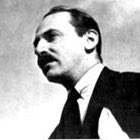
Nathanael West
To simplify Auden’s distinction: A wish is the simple act of imagining oneself as a different person, or in a different situation; a desire is imagining how one might convert one’s current self into a different person or situation. A wish is wanting to be thin; a desire is vowing to join a gym and work-out every day (even if one doesn’t act on it). West’s Disease is the inability to transform one to the other, leading to inaction, loathing, and rage.
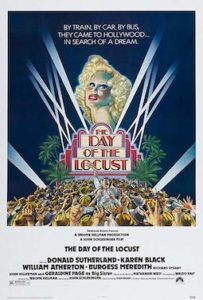
The finest examples of West’s Disease may be found in The Day of the Locust, Nathanael West’s most well-known novel. It’s a brilliant and acidic look at 1930s Hollywood, as witnessed by a motley group of misfits well-distanced from Tinseltown’s glamour, money, and success. “Hollywood’s success as a dream factory is predicated on knowing our wishes and actualizing them on the silver screen,” I wrote two years ago. “That’s why Hollywood appears a tantalizing cure for West’s Disease.”
Auden’s diagnosis that a person with West’s Disease “cannot desire anything” echoes another summation of Sadly, Porn from blogger Resident Contrarian:
[Teach asserts] we in general are incapable of action; we don’t want to act but also can’t act, and we rely on a nebulous “them” to put us on a track towards having to do it. … we want a situation where we don’t have to take an action, but where an action is demanded of us by circumstance.
I don’t think it’s a coincidence that RC’s example (“you don’t want to talk to the pretty girl; you want her to trip so you have to catch her”) sounds like a stock scene in a Hollywood romantic comedy. And I do equate wishing, in Auden’s terms, with Teach’s idea that we crave an externality to occur that actualizes our wishes for us. Teach is perhaps exploring Auden’s wish mechanism a bit more fully, but it looks to me that Auden in 1962 struck upon the same vein of thinking that Teach is attempting to communicate in 2022.
Poster for The Day of the Locust (1975) movie adaptation
West’s Disease is what paralyzes the misfits in The Day of the Locust. These Hollywood outsiders witness the fruits of Hollywood’s money and glamour being distributed to others, never themselves. They want success, but success is supposed to come to them, not vice-versa. Faye Greener, the only character who can claim to have a film career in front of the camera, complains “the reason she wasn’t a star was because she didn’t have the right clothes.” (There’s a similar shrugging passivity in McCoy’s They Shoot Horses, Don’t They?)
But Auden is less absolutist than Teach. It’s West’s Disease, after all: It only afflicts certain individuals, whereas Teach finds it to be widespread. (Perhaps Teach is right, though. Perhaps West’s Disease is contagious and has spread virulently since 1962. Or since 1939, when Locust was published.)
Auden also does not pin down West’s Disease as a natural state of the human psyche, but as a result of modernity:
There have, no doubt, always been cases of West’s Disease, but the chances of infection in a democratic and mechanized society like our own are much greater than in the more static and poorer societies.
When, for most people, their work, their company, even their marriages, were determined, not by personal choice or ability, but by the class into which they were born, the individual was less tempted to develop a personal grudge against Fate; his fate was not his own but that of everyone around him.
But the greater the equality of opportunity in a society becomes, the more obvious becomes the inequality of the talent and character among individuals, and the more bitter and personal it must be to fail.[Again, emphasis mine.]
This jibes with one of my intuitions as I read ACX’s review: That Teach’s near-universality of status-seeking in the human psyche is more likely the result of (or greatly amplified by) recent trends in technology and social organization. Auden wrote the above when notions like meritocracy were ripe in the air and corporate ladders were being erected sky-high. Today, social media and tabloid-esque journalism is king, can show you the numbers to prove it, and has disjointed our culture in unexpected ways.
What’s more, 21st-century American popular media doesn’t merely make “inequalities of talent and character” obvious; our celebrity-obsessed culture revels in and celebrates them. As Budd Schulberg wrote about status climbing: “It will survive as long as money and prestige and power are ends in themselves, running wild, unharnessed from usefulness.”
The Day of the Locust opens describing those with West’s Disease as those who “loitered on the corners or stood with their backs to the shop windows and stared at everyone who passed. … They had come to California to die.” In the final chapter, they rise up in revolt, and Los Angeles burns. Auden saw West’s Disease as damaging not merely to the individual, but to the society around them.
Teach seems to treat West’s Disease as an intellectual, and perhaps masculine, failing. (Apparently cuckoldry is a running theme throughout Sadly, Porn.) The book adopts a scolding and sneering tone toward the reader, implicating them as weak and blithe to this delusion of false desires and status envy.
It is not a straightforward journey, but an adventure of the wrongs done to young Roger and the criminal path they set him on. From Brazil the story continues on into Costa Rica, then to Yorkshire in England, and finally to Dartmoor and Baskerville Hall, where the events of Conan Doyle’s Hound unfold.
As the story progresses, Nelson makes sure to incorporate pieces from the Stapleton life story that Sherlock Holmes relays in the final chapter of The Hound of the Baskervilles. But Nelson also fills in many of the blanks. The result is some adventurous storytelling.