
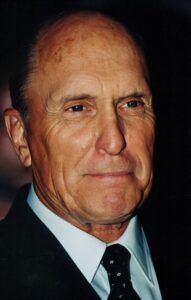
Twice in the past twelve months I’ve found myself taken aback by the death of a Hollywood actor.
First was the death of Gene Hackman, and then earlier this month, the passing of Robert Duvall. Both were generation-defining actors who played some of the most memorable Hollywood roles in the last fifty years.
They were also the kind of resilient actors who brought a hushed, understated presence to their roles. While masculinity is under attack in certain quarters for its toxicity, these men portrayed a quieter, sturdier kind of masculinity worth emulating.
However, I’m not here to discuss their work. I want to point out the Associated Press obituary of Robert Duvall, which offers this endnote:
Former Associated Press Hollywood correspondent Bob Thomas, who died in 2014, was the primary writer of this obituary.
In other words, the writer of Duvall’s obituary died twelve years before Duvall’s obituary was published.
I’ve long been fascinated with the writing process behind obituaries. It’s a journalistic art form clouded by a professional secrecy uncharacteristic of journalism and its desire for transparency. (“Democracy dies in darkness.”)
Obituaries for the powerful and famous are written years in advance of the person’s passing. These obits are not complete, however. A pending obituary remains open and subject to further edits if some new and significant chapter of the person’s life blooms.
Papers and wire services will prepare and sit on hundreds, even thousands, of unfinished obituaries, each a miniature biography-in-development of a full and public life. Newspapers and wire services jealousy guard this corpus of material, not even acknowledging they’re preparing an obit for any particular person. Only death seals an obituary shut, like nailing a coffin closed.
All this prep work is due to journalism’s tight deadlines, since an obituary is expected to be published within hours, not weeks, of the subject’s death. These realities shroud the whole process with a morbid pragmatism that borders on the absurd.
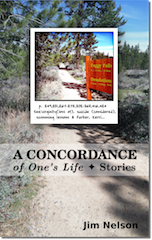
This is what led me to write my short story “The Obituarist,” published by North American Review and collected in my book A Concordance of One’s Life. The story regards a professional obituary writer who, faced with his own mortality, contributes an interview to be used for his own obit.
From the story:
My editors and my fellow obituarists have a little list, The Nearly Departed we call it, celebrities and politicians and artists and authors whom we agree are not long for this world. The unlucky are crossed off the list the same day their obit hits the back pages of the Times. The unluckier are those added when that slot opens. There is no announcement, no press release of their addition. My subjects are not informed privately.
A few years after NAR published “The Obituarist,” I wrote a post for their blog explaining my inspiration for the story, as well as the peculiarities of the obituary writing process.
One peculiarity is when the obituary’s subject outlives the writer, such as what happened to Bob Thomas and Robert Duvall. Back in 2014, I learned that a similar situation happened when Mickey Rooney passed away. I’m certain there’s many other examples to be found.
Sometimes the paper prints the obituary while the subject is still alive. This famously happened to Mark Twain (“The report of my death was an exaggeration”), but also to Axl Rose, Abe Vigoda, Alfred Nobel, and more. One of my favorites is the note Rudyard Kipling sent to the paper which printed his obituary: “I’ve just read that I am dead. Don’t forget to delete me from your list of subscribers.”
Another peculiarity is much rarer than the prior two, that is, when the subject is permitted to read his obituary before his death. In at least one case, a paper acquiesced to publishing an obit knowing that the subject was not dead: Huckster and showman P. T. Barnum convinced a New York newspaper to print his, just so he could read it before passing away a few days later.
So, while I mourn the death of Robert Duvall, I also tip my hat to AP writer Bob Thomas, who passes into infamy in a manner unique to the career of an obituary writer.